
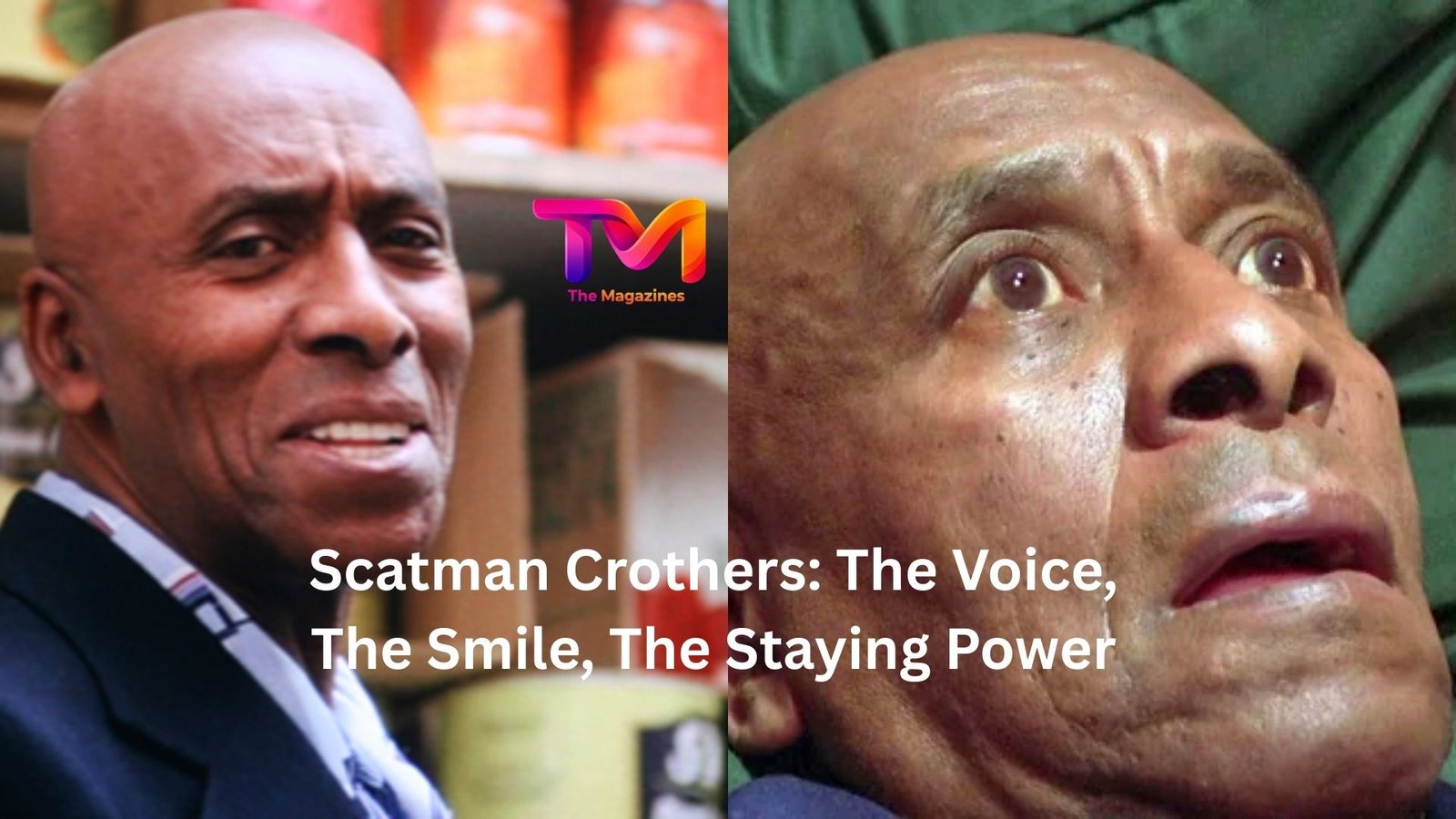
Some performers don’t just act. They arrive. Scatman Crothers had that kind of presence. The second he stepped into a scene—whether he was behind a piano, voicing a cartoon character, or standing in the eerie halls of the Overlook Hotel—you felt it. Warmth. Rhythm. A spark of mischief. And underneath it all, quiet authority.
He wasn’t a conventional leading man. Hollywood didn’t exactly rush to hand him dramatic center stage roles. But here’s the thing: he didn’t need them. Crothers built a career that lasted decades, crossing music, television, film, and animation, leaving fingerprints all over American pop culture. And he did it with style that felt effortless.
Let’s talk about why he still matters.
The Music Came First
Before the movies. Before television. Before the word “icon” was casually thrown around.
Scatman Crothers was a musician.
Born Benjamin Sherman Crothers in 1910, he grew up in a time when opportunity for Black performers was narrow and often unfair. But music? Music had cracks in the door. Jazz clubs. Radio spots. Touring bands. If you had talent, you could sometimes slip through.
And Crothers absolutely had talent.
He became known for his scat singing—improvised vocal rhythms that danced around melodies like playful conversation. That’s where the nickname “Scatman” came from. It stuck. And honestly, it fit him perfectly.
Picture a smoky nightclub in the 1930s. Piano keys clinking under dim light. A small crowd leaning forward, drinks in hand. Crothers grinning as he bends notes, stretches syllables, and turns nonsense sounds into something alive. That energy followed him his entire career.
Music wasn’t just a stepping stone. It shaped how he moved, how he spoke, how he timed a joke or a dramatic pause. Even in serious film roles, you can sense the rhythm in him. He knew how to let a beat land.
Breaking Into Hollywood
Hollywood in the 1940s and 1950s didn’t exactly roll out the red carpet for versatile Black actors. Roles were often limiting, stereotyped, or simply absent.
Crothers navigated that landscape carefully.
He appeared in small parts at first—bit roles that leaned into musical performance or comic relief. But instead of phoning them in, he gave them personality. That’s an underrated skill. Anyone can show up and deliver lines. Not everyone can make a five-minute appearance memorable.
He worked consistently. Radio shows. Supporting film roles. Television guest spots. He became reliable. Directors knew he’d show up prepared. He’d hit his marks. And he’d add something extra.
Now, let’s be honest. Some of those early roles were shaped by the era’s narrow thinking. You can’t look back without recognizing that. But Crothers managed something remarkable: he infused dignity into characters that weren’t always written with much depth.
That takes subtle intelligence.
He understood audience perception. He knew when to lean into humor and when to ground it. That balance kept him working when others faded.
The Shining and the Power of Quiet Strength
If most people know Scatman Crothers today, it’s because of The Shining.
His portrayal of Dick Hallorann in Stanley Kubrick’s 1980 horror masterpiece is one of those performances that lingers long after the credits roll. Not because it’s loud. Not because it dominates the screen. But because it feels human in the middle of madness.
Hallorann isn’t just a side character. He’s the emotional anchor. He sees Danny’s gift—the “shining”—and treats it with respect. There’s gentleness in their scenes together. You believe he cares.
That matters.
In a film filled with cold hallways and psychological unraveling, Crothers brings warmth. He makes you exhale. When he explains the shining to Danny, there’s this calm certainty. No theatrics. No overacting. Just steady presence.
And then, of course, there’s that journey back to the hotel. Snowstorm. Isolation. Determination. He doesn’t hesitate. He feels responsible.
Some critics have debated how the film handles his character’s fate. Fair point. But what’s undeniable is how much heart he brought to it. Without Crothers, the emotional stakes of The Shining would feel thinner.
Kubrick, known for endless takes and meticulous control, reportedly pushed Crothers hard during filming. That says something. Directors don’t demand that level of precision from actors they don’t respect.
The Voice That Raised a Generation
Here’s something that often gets overlooked: Scatman Crothers helped shape childhoods.
If you grew up watching The Transformers in the 1980s, you know Jazz. Smooth. Loyal. Cool under pressure. That voice? That was Crothers.
Voice acting requires a different kind of performance. You don’t have facial expressions. You don’t have body language the audience can see. It’s all in tone, rhythm, breath. Crothers was built for that.
His musical background gave him an edge. He understood cadence. He could stretch a word just enough to make it playful, then snap it back for emphasis. Jazz wasn’t just a robot. He had personality.
It’s funny how many kids probably heard Crothers before they ever saw his face. That’s legacy in a quiet form.
He also voiced characters in animated projects like Hong Kong Phooey, bringing that same laid-back charm. Even when playing a clumsy janitor who secretly turns into a kung-fu crime fighter, he grounded the absurdity. That balance between silliness and sincerity? Not easy.
Presence Over Flash
Some actors chase intensity. Others chase visibility.
Crothers leaned into presence.
Watch him in films like One Flew Over the Cuckoo’s Nest. He doesn’t dominate scenes. He inhabits them. His character, Turkle, has authority but never feels forced. It’s subtle. Controlled. You believe he’s lived a full life before the camera ever started rolling.
There’s something refreshing about that.
In a world that often rewards volume, Crothers showed the power of restraint. He didn’t need to shout to be heard. He didn’t need grand speeches to matter. Sometimes a raised eyebrow or a perfectly timed reaction shot did more than paragraphs of dialogue.
If you’ve ever been in a meeting where one person speaks less but everyone listens when they do—that’s the energy.
Longevity in a Changing Industry
Think about the timeline. Crothers’ career stretched from the 1930s through the 1980s. That’s multiple eras of entertainment. Radio’s golden age. Classic Hollywood. Network television. Blockbuster cinema. Saturday morning cartoons.
Most performers struggle to adapt across one major industry shift. He navigated several.
Part of that was versatility. He could sing. Act. Do comedy. Handle drama. Work live. Work on film sets. Step into a recording booth and make magic with just a microphone.
But part of it was temperament.
By most accounts, he was professional and steady. In an industry built on ego and unpredictability, that kind of reliability is gold. People hire who they trust.
And he kept evolving. He didn’t get stuck trying to recreate the nightclub circuit when television took over. He didn’t resist voice acting because it wasn’t glamorous. He adjusted.
There’s a lesson there. Reinvention doesn’t always mean dramatic transformation. Sometimes it’s quiet adaptation.
The Cultural Weight He Carried
It’s impossible to talk about Scatman Crothers without acknowledging the broader cultural context.
He built his career during decades when Black performers faced systemic barriers. Roles were limited. Representation was often shallow. Pay disparities were real.
And yet, he carved out space.
Not through loud activism on screen, but through consistent excellence. Through longevity. Through showing up and delivering performances that audiences remembered.
That matters.
Representation isn’t just about starring roles. It’s about visibility across genres. Seeing a Black actor in a horror classic. In a psychological drama. In a beloved cartoon. It widens the lens of what’s possible.
Crothers didn’t preach. He performed. And sometimes that’s just as powerful.
Why He Still Feels Relevant
You might wonder why someone who passed away in 1986 still gets talked about today.
Because presence doesn’t age.
Rewatch The Shining and his scenes still feel grounded. Listen to Jazz in The Transformers and the voice still carries swagger. Catch an old interview clip and you see charisma that doesn’t feel dated.
There’s also something appealing about performers who weren’t chasing celebrity culture. Crothers felt like a working artist. Someone who loved the craft more than the spotlight.
That resonates now, maybe even more than it did then.
In an era obsessed with viral fame, there’s something grounding about a career built slowly, steadily, across decades.
The Takeaway
Scatman Crothers wasn’t the loudest name in Hollywood history. He wasn’t splashed across every marquee. But he built something durable.
Music gave him rhythm. Acting gave him range. Voice work gave him reach. And through it all, he carried himself with warmth and quiet authority.
If you go back and watch his performances, pay attention to the small things. The pauses. The slight smile before a line. The way he listens on screen. That’s where the craft lives.
Careers like his remind us that impact isn’t always about being center stage. Sometimes it’s about showing up consistently, bringing heart to the work, and trusting that the audience will feel it.








Leave a Reply