
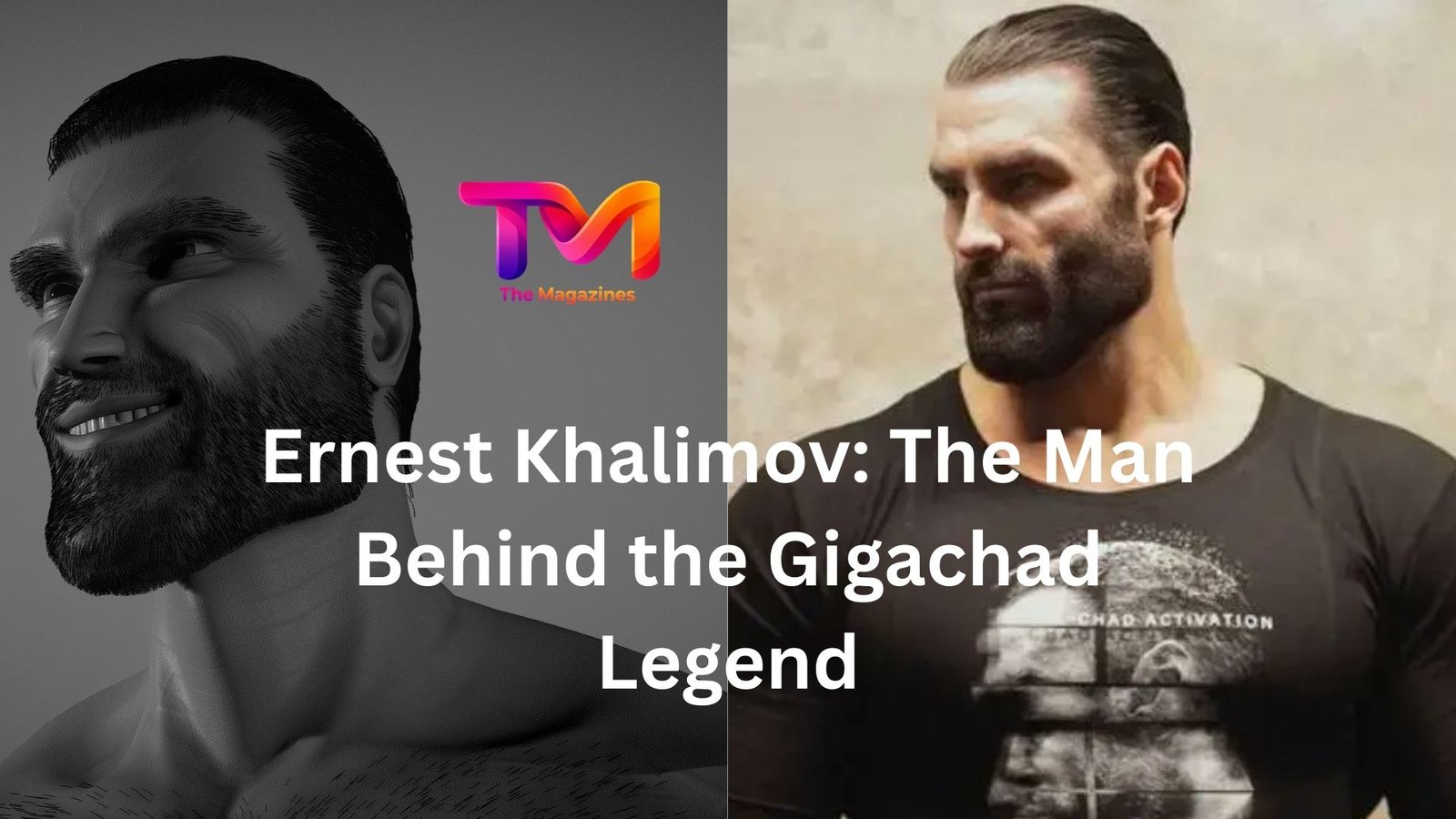
Ernest Khalimov is one of those names that sounds almost fictional. Say it out loud and it already carries a certain weight. For years, people online argued about whether he was even real. Was he a model? A digital creation? A meme brought to life?
That mystery is exactly why he became famous.
If you’ve spent any time on the internet over the past few years, you’ve probably seen the face. Perfect jawline. Flawless symmetry. Thick eyebrows. Sculpted cheekbones. An expression that says nothing and everything at the same time. The image spread under one label: Gigachad.
But behind the viral edits and meme culture sits a real person — or at least a real identity — named Ernest Khalimov.
Let’s unpack how that happened, why people care, and what it says about modern internet culture.
The Rise of the “Gigachad”
The first wave of images featuring Ernest Khalimov came from a project known as the “Sleek’N’Tears” series by photographer Krista Sudmalis. The black-and-white aesthetic was striking. Dramatic lighting. High contrast. Sculpted male form presented almost like a marble statue.
Now imagine scrolling Instagram late at night and suddenly seeing a man who looks like he walked straight out of a Renaissance sculpture. You pause. You zoom in. You check the comments. Someone writes, “This can’t be real.”
That’s how it started.
The internet grabbed the images and did what it always does: turned them into a symbol. Khalimov became the visual representation of the ultimate alpha male — exaggerated, idealized, almost mythic.
Memes followed fast. The word “Gigachad” appeared. Then edits. Then parodies. Soon enough, his image wasn’t just a photograph. It was a cultural shorthand.
Someone posts a video of a guy handling a situation calmly and confidently? Gigachad music plays.
A meme comparing average behavior to “next-level” behavior? Khalimov’s face shows up on the “next-level” side.
The internet loves extremes. And Ernest Khalimov’s look was the perfect extreme.
Real or Not? The Mystery Factor
For a long time, people debated whether he was real.
Some claimed the photos were heavily edited composites. Others insisted he was entirely computer-generated. A few believed he was just a highly stylized model with aggressive post-production.
Let’s be honest — the photos didn’t help clear things up. The lighting was dramatic. The proportions looked almost too symmetrical. It felt engineered.
That uncertainty fueled the legend.
When something looks too perfect, people start questioning reality. It’s the same reaction you get when you see a hyper-polished influencer photo and think, “Okay, what filter is this?”
But in Khalimov’s case, the aesthetic was deliberate. The Sleek’N’Tears project leaned into idealization. It wasn’t about realism. It was about exaggerating masculine form to almost mythological levels.
And that’s important. Because the “Gigachad” identity isn’t just about one person. It’s about how the internet processes visual perfection.
The Internet’s Obsession with Hyper-Masculinity
Ernest Khalimov didn’t become a meme just because he looks good. Plenty of attractive male models exist. What made this different was the extremity.
The jawline is sharper. The expression more stoic. The body more sculpted. The photos almost remove softness from the equation.
Online spaces — especially meme culture — often exaggerate traits for effect. The “Gigachad” became a caricature of peak masculinity. Confident. Silent. Dominant. Unbothered.
Here’s the thing though: memes flatten complexity.
The Gigachad image turned masculinity into a simple visual formula. Wide shoulders. Straight posture. Emotionless stare. That’s it. No context. No personality. Just a symbol.
And symbols are powerful.
You see this in everyday life too. Think about how certain body types dominate fitness marketing. Or how certain facial structures are associated with leadership in pop psychology articles. People respond to visual cues fast.
Khalimov’s look amplified those cues to the max.
When a Face Becomes a Meme
Imagine waking up and finding out your face represents an entire internet archetype.
That’s the strange part of Ernest Khalimov’s story. He didn’t actively brand himself as “Gigachad.” The internet did it for him.
Memes have a life of their own. Once the image detached from its original artistic context, it stopped being about photography. It became a reaction tool. A punchline. A symbol of exaggerated superiority.
In some memes, Gigachad calmly accepts rejection and walks away with dignity. In others, he wins effortlessly. The narrative shifts depending on what people need.
This says less about Khalimov and more about us.
We project meaning onto images. We create heroes and caricatures from still photos. And sometimes the person behind the image barely participates in the story at all.
The Silence Around Ernest Khalimov
One reason the legend grew so large is the relative silence from Khalimov himself.
There hasn’t been a constant stream of interviews or public appearances. No aggressive influencer-style branding. No daily vlogs explaining workouts or mindset hacks.
That absence adds mystique.
In a world where everyone overshares, silence feels powerful. It keeps the character intact. It lets the meme breathe without contradiction.
If he posted casual, unfiltered daily stories about grocery shopping or complaining about traffic, the myth would probably shrink. Not because that’s wrong — but because mystery thrives on distance.
And right now, the Gigachad image exists mostly in curated, stylized form.
The Unreal Standards Question
We can’t talk about Ernest Khalimov without addressing the elephant in the room: unrealistic standards.
The Gigachad look is intentionally extreme. Yet once it becomes viral, some viewers subconsciously measure themselves against it.
You see it in comment sections. Jokes about “never being this guy.” Self-deprecating humor. Comparisons.
Now, on one hand, it’s clearly exaggerated meme culture. Most people understand it’s stylized. On the other hand, repetition shapes perception.
It’s similar to what happened with female beauty standards in media decades ago. When a specific ideal repeats often enough, it quietly sets the bar.
The difference here is that the Gigachad persona is so exaggerated it almost loops back into parody. It’s not just “attractive man.” It’s “hyper-idealized statue-level man.”
That exaggeration may actually protect it from being taken too literally. It feels more like a myth than a benchmark.
Still, it sparks conversation about body image for men — a topic that doesn’t always get the spotlight it deserves.
Art Project or Cultural Phenomenon?
Originally, the images were part of an art project. High contrast. Dramatic poses. Sculptural lighting.
But culture doesn’t care about original intent. Once something goes viral, it evolves.
The Gigachad meme moved beyond photography and into music remixes, video edits, and commentary about dating culture, confidence, and dominance.
What started as stylized portrait work became a global shorthand for “ultimate male archetype.”
That’s fascinating.
Think about how rare that is. Thousands of photos are uploaded daily. Very few turn into symbols recognized across platforms and languages.
It shows how the internet amplifies extremes. Subtle rarely goes viral. Bold does.
Why People Still Talk About Him
Memes come and go fast. So why does Ernest Khalimov still pop up years later?
Because the archetype sticks.
The “Gigachad” isn’t tied to one joke. It represents a broad concept: exaggerated confidence and physical dominance. That concept adapts easily to new situations.
A new trend appears. Someone edits Khalimov’s face into it. Done.
Also, let’s be honest — the aesthetic is memorable. Those images are hard to forget. Even if you don’t know his name, you recognize the face.
There’s also curiosity. People still search to confirm whether he’s real, what he’s doing now, whether the photos were edited. Mystery keeps attention alive.
The Human Behind the Meme
It’s easy to forget there’s a person behind viral imagery.
Ernest Khalimov, regardless of how curated the project was, is more than a jawline. Yet most of the world interacts only with the symbol version.
That’s a strange modern reality. Your image can become bigger than your identity.
It happens with actors, athletes, influencers. But in Khalimov’s case, the gap feels wider because the public persona is almost entirely visual.
No constant commentary. No visible personality shaping the narrative.
Just stillness.
And sometimes stillness speaks louder than explanation.
What the Gigachad Phenomenon Really Tells Us
Step back for a second.
Why did millions latch onto this image?
Part of it is humor. Part of it is exaggeration. But part of it taps into something deeper — the timeless fascination with archetypes.
Every culture has them. The warrior. The hero. The stoic strongman.
Gigachad is just the meme-era version.
We live in a time where identity is fluid, performance is constant, and image travels faster than context. Ernest Khalimov’s rise shows how quickly a face can become a symbol — and how symbols often outgrow their origins.
It also reminds us that internet fame doesn’t always follow the traditional influencer playbook. Sometimes it’s accidental. Sometimes it’s detached. Sometimes it’s almost anonymous.
And that unpredictability is part of the appeal.
Final Thoughts
Ernest Khalimov isn’t just a model tied to an art project. He’s become a cultural icon shaped by meme culture, hyper-masculine exaggeration, and online myth-making.
Whether you see the Gigachad as satire, inspiration, parody, or simply a well-lit photoshoot that went viral, it’s hard to deny the impact.
A few stylized black-and-white photos turned into a global archetype. That alone says something about the power of imagery today.
At the end of the day, the legend of Ernest Khalimov tells us less about one man and more about how the internet builds myths in real time — fast, loud, and larger than life.








Leave a Reply