
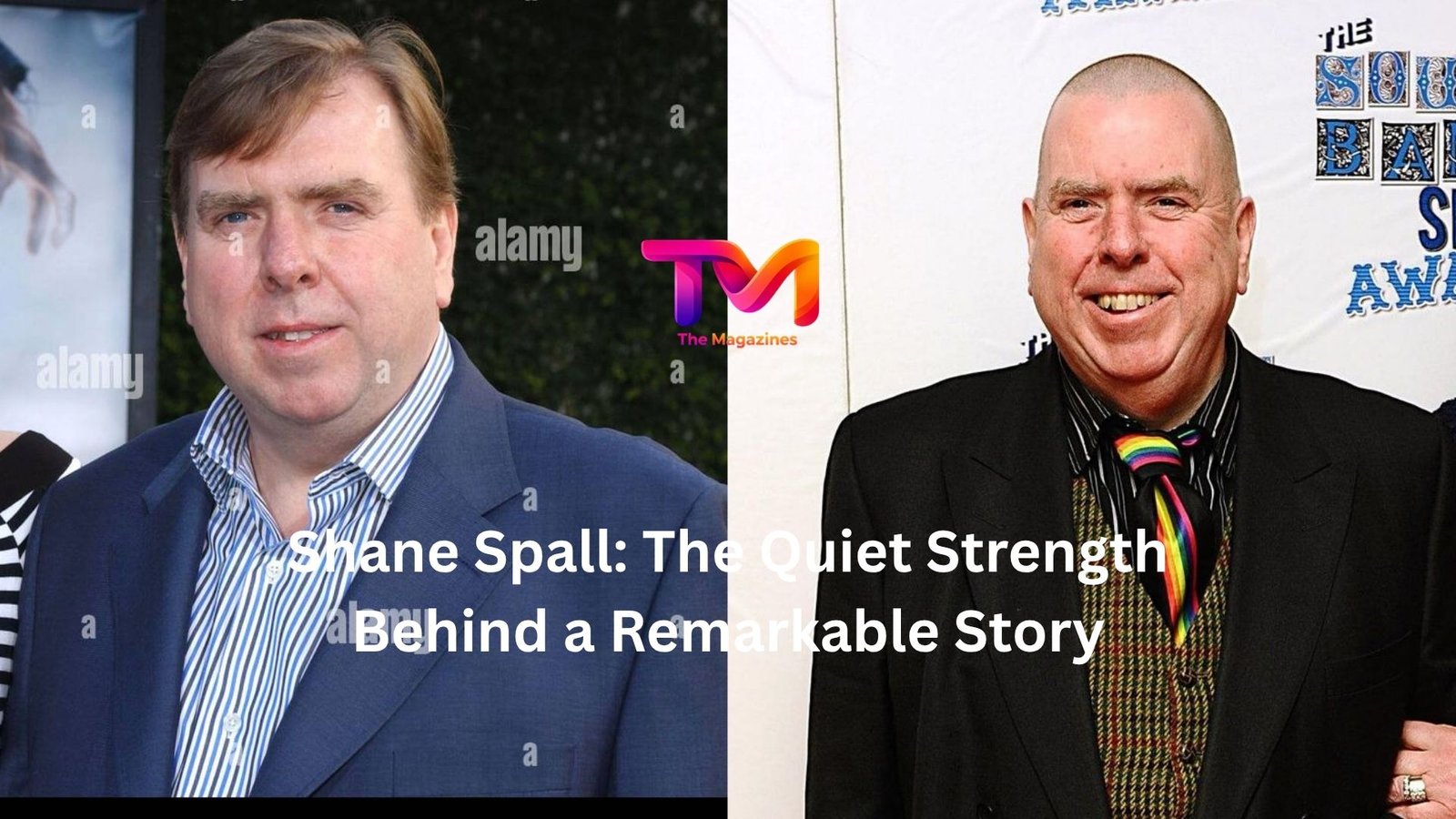
Some people become well known because they chase attention. Others leave a mark simply by living through hard things with honesty and grit. Shane Spall falls into the second group.
A lot of people first hear her name because of actor Timothy Spall. He’s the familiar face from films like Mr. Turner, Secrets & Lies, and the Harry Potter series. But Shane Spall’s story stands on its own. In many ways, it’s more relatable than the polished celebrity world surrounding it.
She’s been a writer, a partner, a mother, a traveler, and, perhaps most importantly, someone who faced a brutal life challenge head-on and talked about it in a way that felt real instead of dramatic.
That’s probably why people connect with her.
There’s no carefully manufactured image there. No loud public persona. Just a woman navigating life, love, fear, illness, recovery, and change while trying to hold onto some sense of normality.
And honestly, that’s a story most people understand better than fame.
Shane Spall and the life she built with Timothy Spall
When people talk about long-lasting relationships in entertainment, the conversation usually turns cynical pretty fast. Fair enough. Celebrity marriages often look unstable from the outside.
But Shane and Timothy Spall have been together for decades, and their relationship has a different feel to it. Less glamorous. More grounded.
They met young, before awards, before industry recognition, before the public knew Timothy Spall’s name. That matters because relationships built before fame often carry a different kind of honesty. You’re not falling for status. You’re figuring out rent, work, exhaustion, and ordinary stress together.
That kind of history changes people.
By many accounts, Shane wasn’t standing quietly in the background while Timothy built his career. She played a major role in helping manage family life and supporting the chaotic rhythm that comes with acting work. Anyone who’s lived with someone in a creative profession knows it can be unpredictable. Long absences. Financial uncertainty early on. Emotional highs and lows.
It’s rarely as smooth as it looks in interviews.
And yet their partnership endured.
There’s something refreshing about that because Shane Spall never seemed interested in becoming a celebrity herself. She stayed recognizable without turning herself into a public brand. That restraint feels almost unusual now.
The cancer diagnosis that changed everything
The turning point in Shane Spall’s public story came when Timothy Spall was diagnosed with acute myeloid leukemia in the mid-1990s.
That kind of diagnosis detonates normal life.
People often imagine illness as a neatly structured emotional journey where everyone becomes instantly wise and grateful. Real life doesn’t work like that. There’s fear. Anger. Exhaustion. Boredom. Financial pressure. Weird moments of dark humor. Long waiting rooms. Small victories that suddenly feel enormous.
Shane Spall spoke openly about this period later on, and what made her perspective powerful was its lack of performance. She didn’t sound polished. She sounded human.
The family was told Timothy had a small chance of survival. Suddenly everything narrowed into hospital visits, treatment schedules, and getting through the next day.
Anyone who has watched someone they love go through serious illness recognizes the strange split that happens. One part of your brain handles logistics. The other part quietly panics at 3 a.m.
You still make tea. You still answer phones. You still try to act normal around children. Meanwhile, your entire world feels unstable.
That reality sits underneath much of Shane Spall’s writing and public reflection.
And people responded because it wasn’t sanitized.
Why their canal boat journey mattered to so many people
After Timothy recovered, Shane and Timothy Spall decided to travel around Britain on a canal boat. At first glance, it sounds almost eccentric. Two people drifting slowly through waterways after surviving cancer.
But the deeper you look, the more understandable it becomes.
Serious illness changes your relationship with time. People stop postponing things. They start asking different questions.
Do we actually enjoy our life?
What pace are we living at?
What matters now?
Their canal boat journey became both literal and symbolic. It wasn’t about escaping reality. It was about reconnecting with it.
Britain’s canals have a strange calming effect. Everything slows down. You can’t rush. You move through towns, countryside, rain, mechanical problems, awkward locks, and random conversations with strangers.
Life becomes immediate again.
Shane documented much of this experience in her writing, especially in The Voyages of the Princess Matilda. What stood out wasn’t grand adventure storytelling. It was the detail. The small observations. The humor in things going wrong.
That’s what made it believable.
A leaking boat problem feels more emotionally real than a motivational speech ever could.
And let’s be honest, many people secretly fantasize about disappearing from normal routines for a while. Not permanently. Just long enough to breathe differently.
The Spalls actually did it.
Shane Spall’s writing feels personal because it is
A lot of memoir-style writing can feel polished within an inch of its life. Every emotional moment lands perfectly. Every lesson arrives neatly packaged.
Shane Spall’s writing has a looser quality that makes it more engaging.
You get the sense of someone observing life while still inside it, not years later after turning everything into a carefully edited narrative. That immediacy matters.
She writes about marriage in a way that feels lived-in rather than idealized. There’s affection, frustration, humor, routine. The texture of long partnership.
That’s harder to fake than people think.
One reason readers connect with her work is that she notices ordinary moments. A strange interaction at a lock gate. The mood shift after bad weather. The exhaustion of caregiving. The relief of laughter during difficult periods.
Small details create trust.
It’s similar to hearing a friend tell a story over dinner. The parts you remember aren’t usually the dramatic headlines. It’s the oddly specific moments.
The wrong turn.
The broken kettle.
The joke someone made in the hospital parking lot.
Those details make people feel less alone.
Living outside the celebrity machine
There’s also something quietly admirable about how Shane Spall handled proximity to fame.
Some people become attached to celebrity culture and start performing constantly. Every appearance feels strategic. Every interview sounds rehearsed.
Shane Spall never really projected that energy.
She appeared selective about public exposure and seemed more interested in authenticity than visibility. In today’s environment, where oversharing has practically become a profession, that restraint stands out.
It also probably helped preserve some sanity.
Fame creates distortion. Ordinary experiences stop feeling ordinary because everyone is watching. Even basic family life can turn into public material.
The Spalls managed to avoid much of that trap.
Not entirely, of course. Public curiosity comes with Timothy Spall’s career. But there’s a noticeable difference between being known and actively chasing attention.
Shane Spall seemed comfortable occupying the first category without sliding into the second.
That balance is harder than it looks.
The emotional reality of caregiving
One aspect of Shane Spall’s story that deserves more attention is caregiving.
People praise caregivers constantly, but they rarely talk honestly about the emotional complexity involved. Caring for someone seriously ill can deepen love while simultaneously draining every ounce of energy you have.
Both things can be true.
You can feel devoted and exhausted at the same time.
Shane’s reflections hinted at that reality without turning it into self-pity. That’s partly why they resonate. She acknowledged difficulty without trying to become inspirational.
There’s a difference.
A person sitting beside a hospital bed for months doesn’t usually feel heroic. They feel tired. They feel scared. They feel trapped between hope and realism.
Many readers saw themselves in that honesty.
And beyond illness itself, caregiving changes identity. Suddenly your day revolves around medication schedules, emotional management, appointments, and uncertainty. Your previous life starts feeling distant.
Recovering from that period takes time too, even after the patient improves.
That emotional aftershock rarely gets discussed enough.
Travel as recovery, not escape
The canal journeys weren’t simply travel stories. They were recovery stories.
That distinction matters.
Escaping suggests avoiding reality. Recovery means rebuilding your relationship with life after something breaks it apart.
The slower pace of canal travel became part of that rebuilding process. There’s something psychologically useful about moving slowly through physical space after trauma. Your nervous system gradually unclenches.
Modern life doesn’t encourage that kind of decompression. Most people move from one obligation to another without pause. Even vacations become productivity exercises.
The Spalls approached travel differently.
There’s a scene many readers can relate to even if they’ve never stepped on a canal boat: reaching a quiet place after a hard period and realizing you can finally think clearly again.
No dramatic revelation. Just silence.
Sometimes healing looks exactly like that.
Why people still search for Shane Spall
Interest in Shane Spall continues because her story taps into universal themes without pretending to offer perfect answers.
Long marriage.
Illness.
Survival.
A search for peace.
The challenge of staying human during chaos.
Those subjects don’t age out.
She also represents a type of public figure that feels increasingly rare: someone visible without being overexposed. Readers and viewers often trust people more when they don’t seem desperate for attention.
And there’s another reason.
Her story reminds people that life after crisis doesn’t always involve dramatic reinvention. Sometimes it involves quieter changes. Different priorities. Slower days. More appreciation for ordinary moments.
That feels achievable.
Not everyone can become famous. Not everyone can radically transform their life overnight. But many people understand the desire to step back after hardship and live more intentionally.
That’s where Shane Spall’s story quietly lands.
The lasting appeal of her perspective
What makes Shane Spall memorable isn’t celebrity association alone. It’s perspective.
She writes and speaks like someone who understands that life can turn frightening very quickly, which tends to strip away superficial nonsense. After enough hardship, people often become less interested in image and more interested in meaning.
You see traces of that in her work and public presence.
There’s warmth there, but also realism.
No glossy life philosophy. No fake positivity.
Just the understanding that difficult experiences reshape people, and sometimes the healthiest response is to slow down, pay attention, and keep moving forward anyway.
That’s probably why readers continue finding comfort in her story years later.
It feels honest.













Leave a Reply