
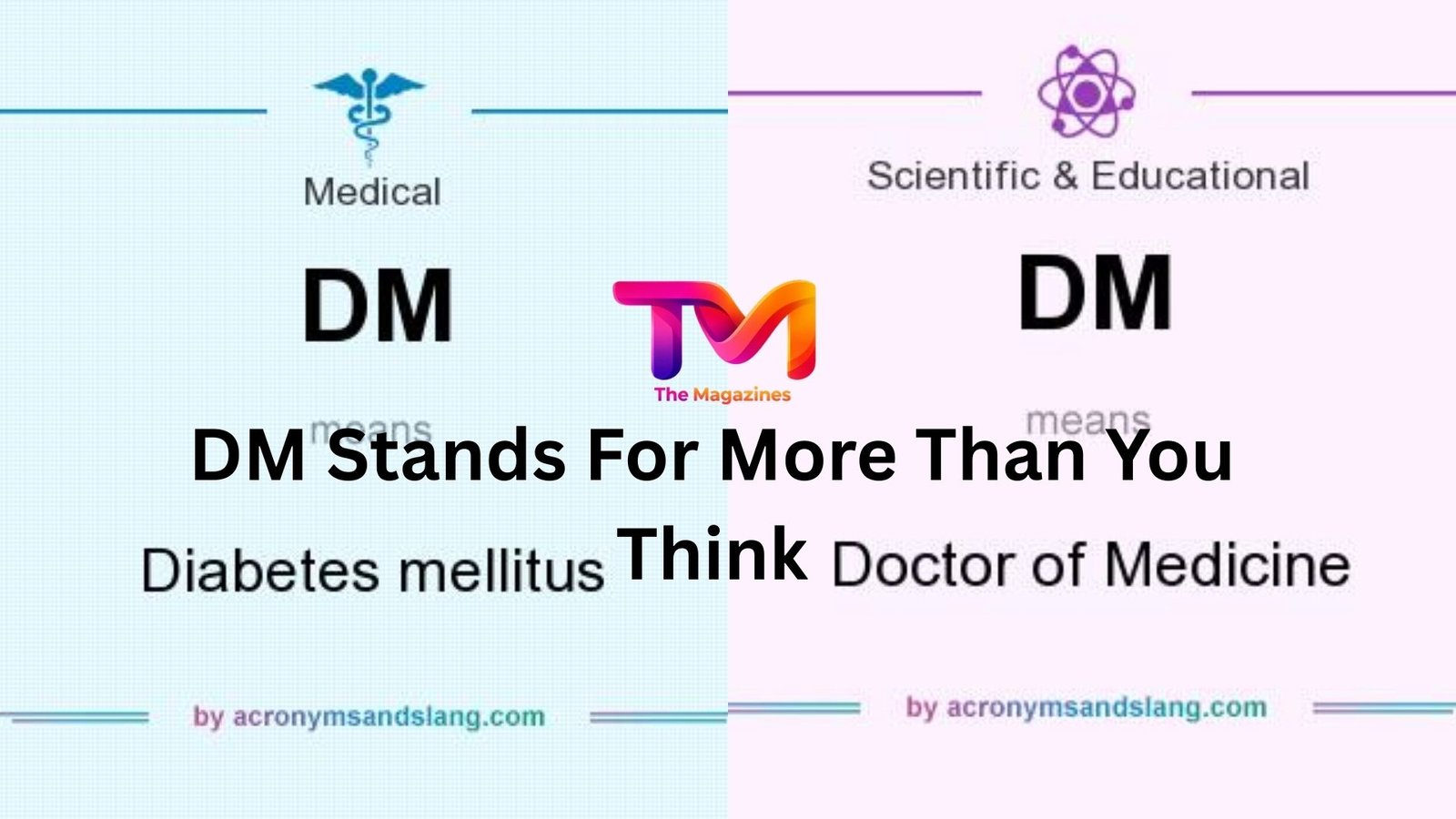
You’re scrolling through Instagram, and suddenly someone slides into your DMs. Or maybe you’re working on a project and someone asks if you’ve “DM’d the client yet.” That little acronym shows up everywhere—but what exactly does “DM” stand for?
Let’s clear the air.
DM: The Obvious One First
Most people today hear “DM” and instantly think: Direct Message.
That’s the social media version. A direct message is just what it sounds like—a private note sent from one user to another. No one else sees it. No comments section, no public replies. Just a one-on-one message that feels more personal.
You’ll see it all over platforms like Instagram, Twitter (now X), TikTok, even LinkedIn. The line usually goes something like:
“Hit me up in the DMs”
Or “DM me for details”
Or worse: “Slide into my DMs 😉”
Cringe? Maybe. But also effective. Especially if you’re trying to have a quieter, less performative conversation. Or flirt. Or just avoid a messy thread.
Let’s say your friend posts about selling concert tickets. You’re interested. You could comment publicly—but you don’t want to let others know you’re pouncing first. So you drop a DM. Fast, direct, and discreet.
But Wait—That’s Not the Only DM
Depending on who you’re talking to, “DM” can mean something entirely different.
Ask any tabletop RPG nerd what DM stands for, and their eyes light up.
“Dungeon Master,” they’ll say with reverence.
In Dungeons & Dragons and similar games, the Dungeon Master runs the show. They create the world, narrate the events, play all the non-player characters, and basically act as the god of the game. If you’ve ever played—or watched friends play—you know the DM has power. But also responsibility.
They’re the ones painting the picture.
“You enter a crumbling tavern. The floorboards groan. A cloaked figure watches from the corner…”
Yeah. That’s the DM talking.
In that world, “DM” doesn’t mean private message. It means storyteller, rulekeeper, referee, and part-time villain. Sometimes all at once.
Context Is Everything
Here’s the tricky part. DM means different things in different worlds, and context is king.
In your office Slack chat, someone might say, “Just DM me your edits.” They’re not asking you to roleplay a wizard duel. They want a private message.
But if you’re browsing Reddit threads in a D&D forum and someone says, “My DM killed off my favorite NPC,” you’re in fantasy land. No messaging app involved.
Even in the corporate world, “DM” can sneak into other meanings.
Project managers might refer to a Delivery Manager as a DM. That’s someone overseeing the progress of a team or product rollout. Less drama than a Dungeon Master, but sometimes just as many surprises.
There’s also Data Management, Device Management, and a few other niche uses, especially in tech circles. But those don’t show up in everyday chat quite as much—unless you’re deep in IT or enterprise software.
So Why Does Everyone Just Say “DM”?
It’s short. Easy to type. And like most acronyms, it feels faster than spelling things out.
Plus, DM has this vibe of being a little more insider. People don’t say, “I sent a private message on Instagram.” That feels clunky. A bit too proper. They say, “I DM’d her.”
It’s the same reason we say “LOL” instead of typing “laughing out loud.” Even though, let’s be honest, no one’s actually laughing out loud most of the time.
DM is part of the digital slang that makes online talk feel casual and fast. But it also opens the door to mixed meanings.
One time, I was helping my niece with a school project. She told me she was waiting for her “DM to respond.” I asked, “Wait, your Dungeon Master?” She rolled her eyes. “No, my friend on Snapchat.”
Fair enough.
DMing: A Verb Now
Language evolves fast. “DM” didn’t just become a noun. It turned into a verb.
People say “I DM’d him.” Or “She’s DMing me about the job.” No one waits for grammar rules to catch up. The internet moves too fast for that.
And honestly? It works. If everyone understands what you mean, that’s enough.
Of course, it’s not without its awkward moments. Especially when someone uses “DM” in a way that’s way too casual for the setting.
Picture this: You’re in a job interview. The recruiter says they’ll follow up by email, and you go, “Cool, just DM me.”
Uh-oh. Unless you’re both 22 and working in influencer marketing, that might land a little weird.
When DM Means More Than Just a Message
There’s something about the idea of direct messages that makes them feel personal—even a little intimate.
Unlike comments or group chats, DMs are quiet. One-on-one. Out of sight.
That’s why they’ve become such a big part of how we communicate today. Whether it’s reconnecting with someone from your past, starting a conversation with someone new, or sliding into professional networking with a touch more privacy—it all happens in the DMs.
But with that comes the responsibility. Because let’s be real: not all DMs are welcome.
Unsolicited messages—especially from strangers—can quickly cross the line. It’s why most platforms now have filters or “message requests” to give users some control. So yeah, DM’ing someone you don’t know? Think twice. Ask yourself: would I say this to them in person?





Leave a Reply