
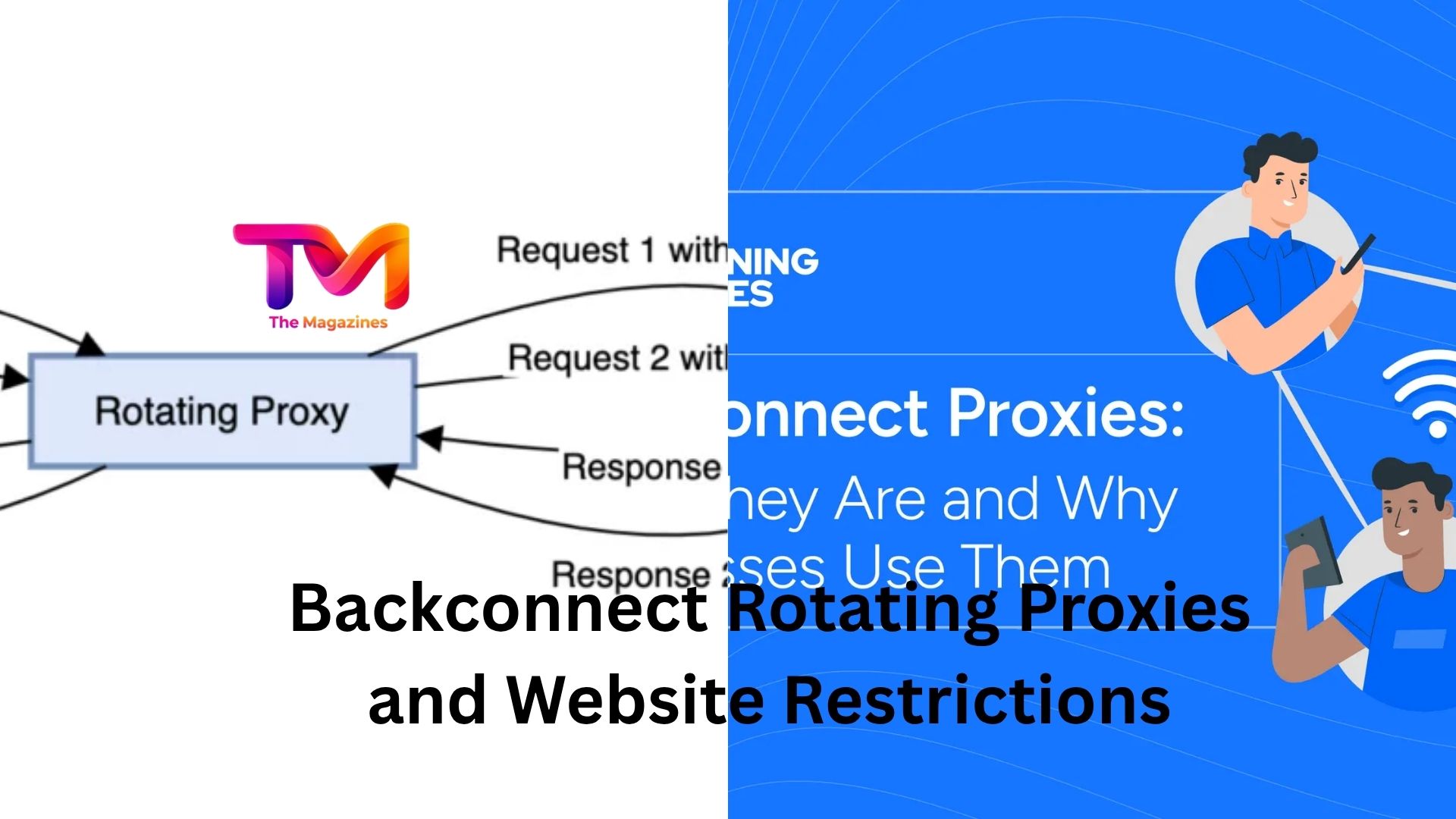
Backconnect proxies are increasingly used in digital environments where users or businesses require persistent access to websites that actively monitor and limit traffic. Many modern websites have security processes in place that prevent this behaviour, whether that might be too many requests from a common IP address, automatic browsing behaviours, or repeated access from the same location. In such situations, a website may implement filters such as rate limiting, captchas, temporary blocks, and permanent IP restrictions. Backconnect rotating proxies can mitigate this by having thousands of backconnectors on one side and also a central machine to rotate traffic over various IP addresses.
What are some of the Site Restrictions?
The majority of website restrictions serve to protect servers from overload, abuse, and bot-level automation. Such systems are very frequent on websites such as search engines, e-commerce websites, social media, or ticketing sites. If a website sees IP addresses that are seen repeatedly, or at least twice, in a particular case, it might consider this activity to be suspicious. Typical restrictions include slowing the response time, ensuring captcha verification, restricting how many requests should be made per minute, or entirely blocking access. These protections are useful for very simple automation, but they can potentially impair legitimate business operations, which must have access to massive amounts of data.
How Backconnect Proxies Can Overcome These Limits
Backconnect proxies alleviate these limitations by altering the IP address visible when an activity is requested or a session is initiated. Rather than allowing all traffic to be received from a single IP server, requests are spread across a vast pool of rotating addresses. That way, this activity is disguised as if it were an activity from several different users at various locations.
It works out of a central gateway, as the system works through a master gateway. Users connect once, and it immediately assigns a new IP address from that proxy pool. Each request can use a different IP, or the system can rotate IPs at timed intervals depending on configuration. Because websites get traffic from an assortment of other sources, it’s much more difficult for them to identify patterns that would otherwise trigger a restriction.
Steering Away From Rate Limiting and Captchas
Rate limiting is one of the most popular restrictions websites use to limit the number of requests that can be made using an IP address in a particular period of time. Searching these multiple request pages, and if it receives too many requests, then the website may block the site or slow down access. Backconnect proxies avoid this by spreading requests out over multiple IP addresses. Rather than overdriving each source, the system shares traffic so that no single IP seems to be overused. Equally, CAPTCHA is frequently used when websites suspect automated activity. While backconnect proxies make traffic appear more natural and distributed, the occurrence of CAPTCHA challenges is significantly reduced in many cases.
Eliminating IP Bans and Blocks
An IP ban is another commonly used restriction on web traffic for stopping unwanted traffic. No IP may be allowed to access the site at all if it is flagged. For businesses, where data access needs to be continuous in nature, this can have a massive impact. As regards backconnect rotating proxies, the system automatically pivots from one IP to another from the pool when blocking one IP address. This allows operations to continue uninterrupted. As a consequence, the IPs are changing constantly, making it even more difficult for websites to give a single source of traffic a permanent blacklist.
Making Traffic Appear as Normal as Possible
People watch and check the traffic data to discern users from the impersonal machinery of a computer, and can detect whether they are actual humans or digital bots. The same IP addresses repeatedly request requests in a consistent manner and time, and volume can also attract suspicion. Backconnect proxies are used to help make traffic look more realistic, distributing requests between different IP addresses, pages, and locations with back-channel addresses. This creates the appearance of multiple independent users instead of just one automated system. A business might find that this approach is particularly useful when gathering data at scale, yet avoiding detection mechanisms designed to block bots.
Website scraping is one of the most popular cases of scraping, and it is one of the main use cases which has its own websites, where the most important reason is to avoid web constraints. Firms store public information like prices, product listings, reviews, and market intelligence, for example, from consumers. Scraping large quantities of data without proxies would soon lead to blocks or captchas. Backconnect rotation of proxies means that requests can be spread over a large number of IP addresses, so they need not be transmitted to security systems, and real data is continuously collected.
Use in SEO & Market Analysis
Search engine tools frequently require thousands of searches to follow rankings and analyse competitors. Many search engines track repeated queries from the same IP address and can block or restrict access. Backconnect proxies can deal with this by rotating IP addresses for each search/session, allowing SEO pros to have a more comprehensive dataset of geographical origin in their search by rotating IP addresses instead of being restricted at all with search-based restrictions.
Application in E-commerce and Price Monitoring
Backconnect proxies help online retailers monitor what others are charging and whether products are available. Without rotating IPs, access to competitive sites will lead to restrictions with very little to no downtime. Through their use of IP rotation, businesses can continuously monitor market changes and be more sensitive to pricing strategy adjustments than ever before without being blocked.
Limitations and Reflections
Although backconnect proxies greatly lower website constraints, they do not offer a panacea. Modern web applications are more sophisticated than static IP-based detection with elements such as browser fingerprinting, cookies, and behaviour analysis. So even though IPs are rotating, sophisticated systems still have the possibility of automatically detecting anything if otherwise similar patterns persist. Also, proxy networks are often expensive, and performance can differ according to whether a residential, datacenter, or mobile IP is used.
Final Perspective
Backconnect rotating proxies are crucial for users and businesses to minimise website restrictions, and backconnect rotating proxies are a major component in this solution. Since traffic travels between different IP addresses, and connections are updated with respect to the IP address of the website, this makes it more difficult for the websites to discover patterns that result in blocking/restraining information. As platforms adopt more and more robust cybersecurity, these proxy services work to maintain access, support substantial processing of data, and minimise the disruption to a website’s operations.













Leave a Reply