
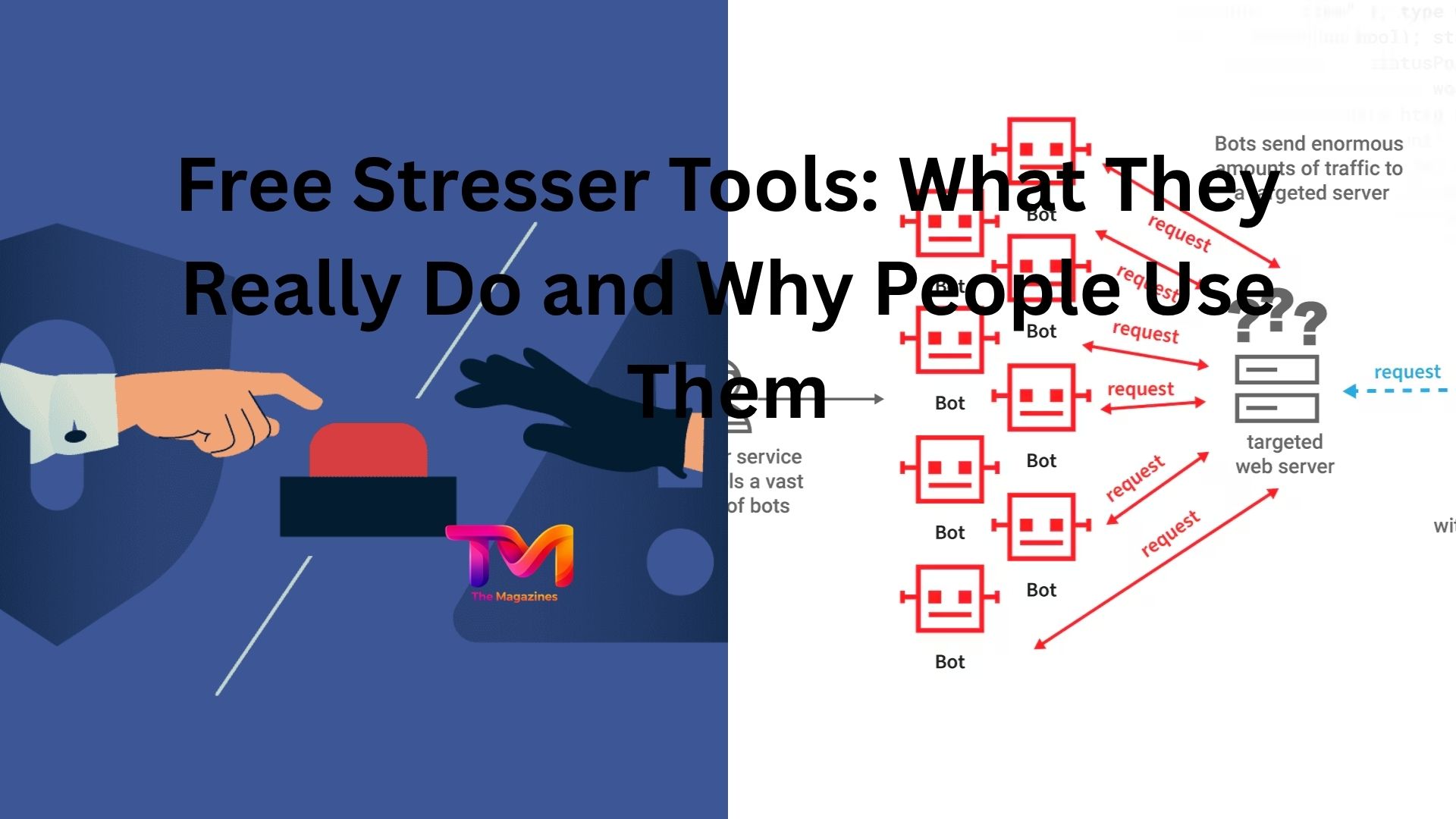
A free stresser is one of those internet tools that sounds suspicious the first time you hear about it. Some people look for one out of curiosity. Others want to test their own servers. A few just heard the term in a gaming forum and wondered what the fuss was about.
The problem is that the word “stresser” gets thrown around loosely online. Sometimes it refers to legitimate server testing tools. Other times, people use it as a softer label for services tied to DDoS attacks. That confusion matters because the line between testing your own infrastructure and attacking someone else’s systems is very real.
Still, stress testing itself is completely normal. Every serious website, online game, streaming platform, or app eventually needs to find out what happens under heavy traffic. Can the server handle 500 users at once? What about 5,000? What breaks first? Those answers don’t magically appear.
That’s where legitimate free stresser tools come into the picture.
Why People Use a Free Stresser
Imagine running a small online store during a holiday sale.
Everything works fine on a regular Tuesday afternoon. Then a promotion goes live, traffic spikes, and suddenly checkout pages stop loading. Customers refresh the page ten times, get frustrated, and leave.
It happens more often than people think.
A stresser tool helps simulate that pressure before real visitors arrive. Instead of waiting for disaster, developers intentionally overload parts of their system in a controlled way to see how it behaves.
Sometimes the issue isn’t the server itself. It could be a database bottleneck. Maybe image loading slows everything down. Maybe login requests pile up because one script is inefficient. Stress testing exposes weak spots that normal testing misses.
Free tools are especially attractive to small developers because budgets are tight. A startup with two people and a rented VPS usually isn’t paying thousands for enterprise load testing software.
And honestly, many free options are surprisingly capable.
The Difference Between Stress Testing and DDoS Attacks
Here’s the part people often gloss over.
A legitimate stresser tests systems you own or have permission to test. A DDoS attack targets systems without permission and aims to disrupt them.
Technically, some methods can look similar from the outside. Both involve large amounts of traffic hitting a server. But intent and authorization completely change the situation.
It’s like pressure-testing your own plumbing versus smashing someone else’s pipes.
A lot of websites advertising “free stressers” blur this distinction on purpose. They use edgy language, flashy dashboards, and promises of “powerful attacks.” That’s usually a red flag.
Real testing platforms focus on analytics, traffic simulation, uptime behavior, and infrastructure performance. They talk about response times and scalability, not “taking sites offline.”
That difference matters legally too.
In many countries, unauthorized attacks against servers are criminal offenses. Even teenagers have ended up with serious consequences because they thought clicking a button on a random website was harmless.
The internet has a weird habit of making risky things feel casual.
What Legitimate Free Stressers Actually Test
Not every server problem comes from raw traffic volume.
Some systems fail because too many users try logging in simultaneously. Others struggle with database queries. APIs can collapse under repeated requests even when CPU usage looks normal.
A decent stresser tool helps uncover those weaknesses.
Here are a few things developers commonly test:
Response time under load
A website might load in one second for ten users but take fifteen seconds for a thousand. That slowdown matters more than many people realize.
Most visitors won’t patiently wait around.
Concurrent user handling
Gaming servers deal with this constantly. One extra burst of players joining a match can expose synchronization problems or memory leaks.
API stability
Modern apps rely heavily on APIs. Food delivery apps, streaming platforms, payment systems — all of them depend on constant back-and-forth communication.
A stressed API often becomes the first domino to fall.
Infrastructure scaling
Cloud platforms can automatically scale resources, but autoscaling isn’t instant. Stress tests help teams see whether scaling kicks in fast enough during spikes.
That’s especially important for events with predictable traffic surges, like ticket sales or product launches.
Popular Free Stresser and Load Testing Tools
The internet is packed with questionable “booter” sites pretending to be testing tools, so it’s smarter to stick with known platforms and open-source software.
A few names consistently come up among developers.
Apache JMeter
JMeter has been around forever in internet years.
It’s open-source, free, and flexible enough for serious testing. Developers use it to simulate traffic, test APIs, and analyze server behavior under load.
The interface feels a little old-school, honestly. But it works.
A lot of experienced engineers still rely on it because they trust the results more than flashy cloud dashboards.
k6
k6 became popular because it feels modern and developer-friendly.
Instead of clicking through endless menus, users define tests with JavaScript. That makes automation easier, especially for teams already working in code-heavy environments.
It’s lightweight too, which people appreciate.
Locust
Locust uses Python and focuses on scalability.
One thing users like is how readable the scripts are. Even people without deep testing experience can usually understand what’s happening quickly.
There’s something refreshing about tools that don’t feel like they require a certification course just to get started.
Loader.io
For people who want something simpler, Loader.io is often the entry point.
You connect your site, configure traffic levels, and run basic load tests from the browser. The free version has limitations, but it’s enough for small projects and quick checks.
Not every test needs enterprise complexity.
Free Doesn’t Always Mean Safe
This is where caution matters.
Search for “free stresser” online and you’ll immediately run into shady websites promising massive traffic power with almost no verification. Some barely hide the fact they’re selling attacks.
Others are worse.
A few collect user data aggressively. Some inject malware. Some log activity that users assume is anonymous. A number of these platforms disappear overnight and reappear under different names a week later.
That alone should tell you something.
If a service encourages targeting random IP addresses without proving ownership, it’s best avoided entirely.
Legitimate testing platforms care about compliance because real businesses depend on them.
Small Sites Need Stress Testing Too
There’s a common assumption that only giant companies need load testing.
Not true.
Sometimes smaller sites are more fragile because they run on limited hosting plans with fewer resources and minimal redundancy.
A local event website can crash from one viral social media post. A niche gaming community can overload after a streamer mentions it. Even personal projects get unexpected traffic spikes.
One developer shared a story online about launching a simple budgeting app that normally had maybe fifty active users per day. Then a finance blogger linked to it unexpectedly.
Traffic exploded overnight.
The app didn’t technically go down, but database requests slowed so badly that users assumed it was broken. Signups stalled. Reviews turned negative within hours.
That experience pushed the developer to start running regular stress tests.
Pain tends to be a memorable teacher.
Gaming Communities and Stressers
Gaming circles talk about stressers constantly, though not always in healthy ways.
Competitive multiplayer environments sometimes attract people looking to disrupt servers or harass players through attacks. Certain gaming forums practically normalized this behavior for years.
Thankfully, attitudes have shifted somewhat.
Now there’s more emphasis on defensive infrastructure, anti-DDoS protection, and responsible testing. Hosting providers for game servers often include mitigation services automatically because attacks became so common.
Still, the overlap between gaming culture and stresser terminology explains why many younger users first encounter the concept there.
And honestly, some of them don’t fully understand the legal or ethical boundaries involved.
Cloud Services Changed the Game
A decade ago, stress testing was harder for smaller teams.
Now cloud computing makes it dramatically more accessible.
Developers can spin up temporary testing environments, simulate thousands of requests, collect metrics, then shut everything down in hours. That flexibility lowered the barrier significantly.
At the same time, attackers gained access to more scalable infrastructure too. That’s part of why hosting companies invest heavily in traffic filtering and mitigation systems today.
It became an arms race in many ways.
The upside is that modern defensive tools are far stronger than they used to be. Even mid-sized businesses now have access to protections that once only huge corporations could afford.
What Makes a Good Stress Test
A useful stress test isn’t just blasting traffic randomly.
That approach produces messy data and limited insight.
Good testing mimics realistic user behavior. For example:
Users browsing products
People logging into accounts
Search requests happening simultaneously
Checkout processes running under pressure
API calls occurring in bursts
That realism matters because systems rarely fail in neat, predictable ways.
Sometimes one tiny feature creates a chain reaction. A slow database query leads to thread exhaustion. That slows authentication. Then sessions pile up. Suddenly the entire app becomes unusable even though CPU usage still looks manageable.
Without targeted testing, those weaknesses stay hidden until real users find them first.
Which is usually the worst possible moment.
The Ethics Side Isn’t Complicated
The internet sometimes tries to make this topic morally gray.
It really isn’t.
Testing systems you own or are authorized to test is legitimate. Attacking systems you don’t own is not.
That’s the line.
Curiosity alone doesn’t protect people from consequences. Plenty of users have learned that after treating online attack tools like harmless experiments.
And beyond legality, there’s a practical issue: disruptions affect real people. Small businesses lose sales. Communities lose access. Services become unstable for ordinary users who had nothing to do with the situation.
It’s easy to forget there are humans on the other side of servers.
Final Thoughts on Free Stressers
A free stresser can be a useful tool when it’s used properly. Developers, administrators, startups, and hobbyists all benefit from understanding how their systems behave under pressure.
That’s normal engineering work.
But the internet also turned the word “stresser” into something murkier, largely because shady services adopted the label while encouraging abusive behavior. Knowing the difference matters more than ever.
If you’re exploring stress testing, stick with trusted tools, test only systems you control, and focus on learning how infrastructure responds under real-world conditions.
Because eventually every online system faces pressure.
The smart ones prepare for it before users notice the cracks.













Leave a Reply