
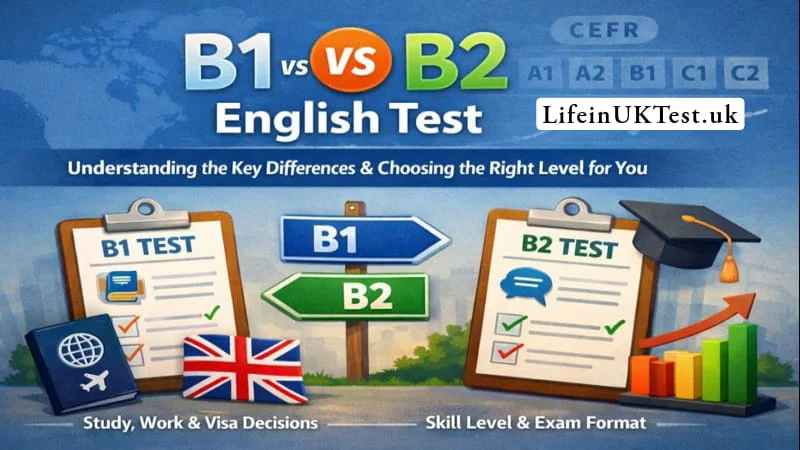
Picture English ability the way you’d picture two versions of the same app. B1 is the version already installed and working, nothing fancy, but it runs the essentials without crashing. Testizer’s english test b1 assessment measures exactly that stage: functional, dependable, capable of getting through the day without a hitch. Neither version is wrong. They simply serve different demands, and understanding what separates them is the first step toward closing that distance.
What B1 Handles Well
At B1, a learner operates independently in familiar territory. Ordering in a restaurant, describing a weekend, or following a straightforward work email doesn’t require translation or hesitation. This version handles the routine stuff without any trouble, which is why many institutions treat B1 as their minimum bar.
B1 struggles with anything unscripted. Fast native speech, abstract argument, and nuanced opinion push past what B1 was built to process comfortably. That’s not a flaw in the level. It’s simply the edge of what it was designed for.
What B2 Adds to the Picture
B2 doesn’t just add vocabulary, it adds range. A B2 speaker can debate a position, follow a documentary without subtitles, and write something more layered than a simple, connected paragraph. The upgrade changes what situations a learner can walk into without feeling out of depth.
This is also where a B1 result and a B2 result start meaning different things to whoever’s reading them. A B1 certificate says this person functions independently. A B2 certificate says something more: this person operates with flexibility, close to native pace, across conversations that don’t follow a predictable script.
How the Upgrade Happens
Unlike software, there’s no single patch that pushes a learner from B1 to B2. It happens gradually, almost without anyone noticing at first, through a few shifts that each close a specific gap.
- What you read and listen to. Textbooks get someone to B1 just fine, but B2 comes from messier, less forgiving sources: podcasts, unscripted interviews, native conversations where nobody slows down for the listener. The discomfort of not catching every word is more or less the point.
- What you practice saying. B1 material asks what happened. B2 material asks what you think about what happened, and why. This shift toward argument and justification, spoken or written, builds a different kind of fluency than simple description ever could.
- What you read for fun. Simplified readers built the B1 vocabulary efficiently enough, but B2 growth usually means stepping into material never adapted for learners in the first place, real newspaper articles, opinion pieces, and fiction with no glossary in the margins.
Underneath all of it is ambiguity. B1 material is predictable, built to be understood. B2 material isn’t, and learning to extract meaning from something unclear or fast, without needing every word to land, becomes a skill of its own.
Measuring the Upgrade as It Happens
Here’s where most learners lose the thread. Without some kind of checkpoint, it’s nearly impossible to know whether any of this effort is paying off. Confidence rises unevenly, which makes self-assessment a shaky guide at best.
This is where testing periodically earns its value. Testizer offers both a B1-level test and a general proficiency assessment stretching through B2 and beyond, giving learners a way to check, at intervals, whether their progress is actually moving. A result that climbs from a solid B1 toward the lower edge of B2 confirms the approach is working. A flat result suggests it’s time to change tactics, more unscripted input, and more opinion-based practice.
Choosing Your Next Checkpoint
The distance between B1 and B2 isn’t closed by studying harder in the same direction. It’s closed by studying differently, aiming for flexibility instead of just correctness. Wherever you currently sit in that shift, checking your actual level with a structured english test b1 or full-range assessment turns a vague sense of progress into a documented milestone you can build the next stage of learning around.





Leave a Reply