
How Do Chinese Story Books for Primary 5 Build Vocabulary Skills?
Developing strong vocabulary skills is one of the most important parts of learning Chinese at the primary school level. At Primary 5, students are expected to move beyond basic sentence construction and begin expressing more complex ideas in both written and spoken forms. This transition requires a wider vocabulary base, stronger comprehension ability, and greater familiarity with contextual language usage.
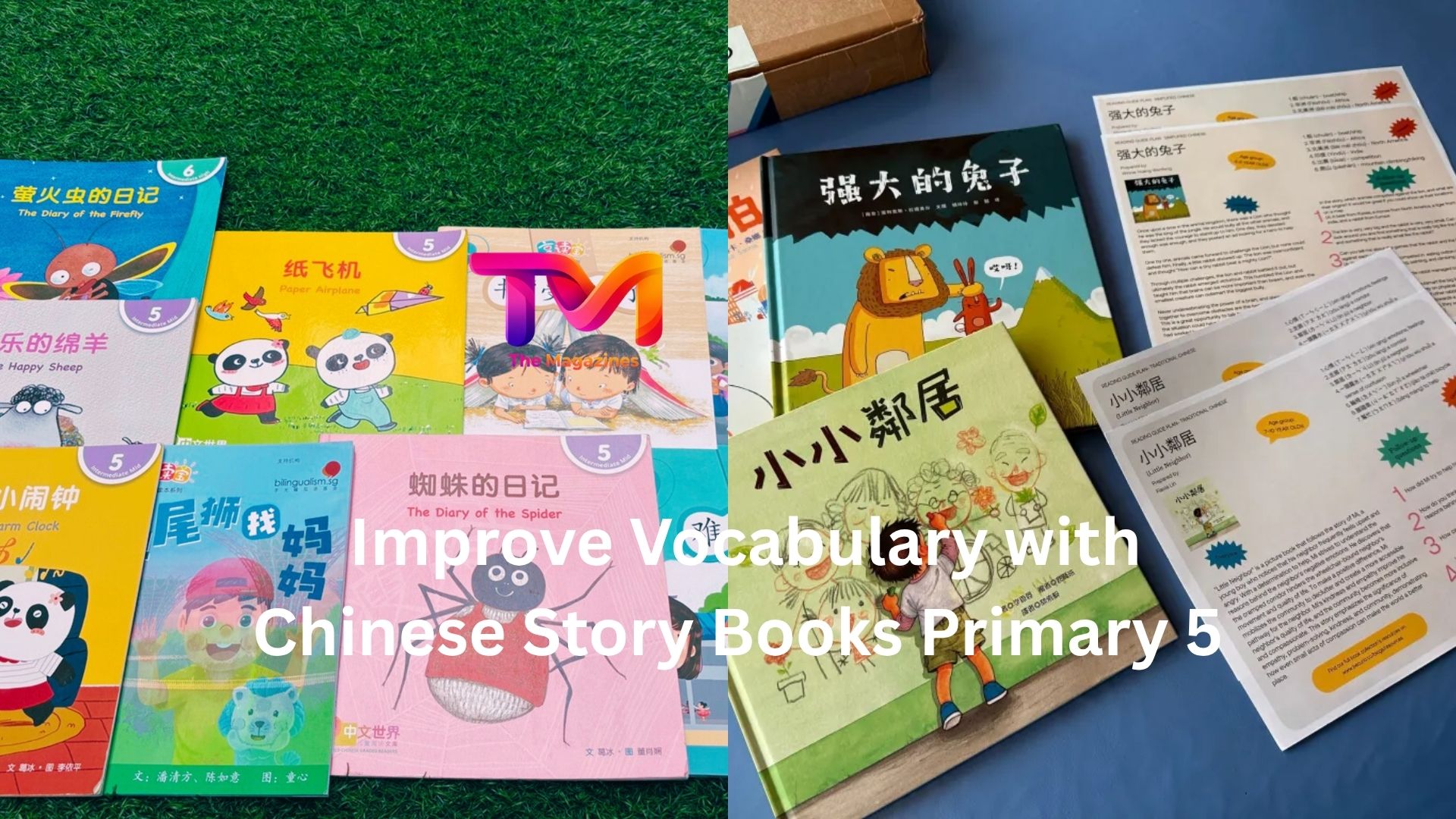
One of the most effective ways to support this development is through consistent reading of Chinese story books for primary 5. Story-based learning helps students encounter new words naturally within meaningful contexts, making it easier to understand usage, meaning, and sentence structure at the same time.
Instead of memorising word lists, students learn vocabulary in a more engaging and memorable way through storytelling, dialogue, and real-life scenarios presented in stories.
Why Vocabulary Development Becomes More Important in Primary 5
At Primary 5, Chinese language learning becomes more advanced. Students are expected to write longer compositions, understand complex comprehension passages, and express opinions clearly.
A limited vocabulary can make it difficult for students to:
- Express ideas clearly in writing
- Understand comprehension passages fully
- Use appropriate words in compositions
- Communicate confidently in oral exams
This is why structured exposure to language-rich materials is essential during this stage.
A well-designed primary Chinese book helps bridge this gap by introducing students to new vocabulary in a gradual and structured manner.
Learning Vocabulary Through Context Instead of Memorisation
One of the biggest advantages of story-based learning is contextual vocabulary exposure. Instead of learning isolated words, students understand how words function within sentences and stories.
When students read stories, they naturally observe:
- How words change meaning in different contexts
- How sentences are structured in real communication
- How emotions and actions are expressed through language
- How vocabulary is used in descriptive writing
This method improves both understanding and retention.
Compared to memorising word lists, contextual learning is more effective because students remember words based on meaning and experience rather than repetition alone.
How Storytelling Strengthens Word Retention
Stories create emotional and mental connections, which help students remember vocabulary more effectively. When students associate words with characters, actions, and plot events, they are more likely to retain them long-term.
For example, when reading Chinese story books for primary 5, students may encounter new descriptive words used in emotional or dramatic situations. These associations help them recall vocabulary during writing or comprehension tasks.
Key benefits of storytelling for vocabulary retention include:
- Improved memory through context association
- Better understanding of word usage
- Stronger emotional engagement with language
- Increased interest in reading Chinese texts
This makes vocabulary learning feel more natural and less mechanical.
Role of Structured Learning Materials in Vocabulary Building
While reading storybooks is highly beneficial, structured learning materials also play an important role in reinforcing vocabulary skills. A well-designed primary Chinese book often complements story-based learning by providing exercises that strengthen understanding.
These materials usually include:
- Vocabulary usage exercises
- Sentence construction practice
- Comprehension-based word application
- Guided writing activities
This combination of reading and practice helps students apply what they learn more effectively.
In many classrooms, teachers encourage students to combine story reading with structured practice to reinforce vocabulary learning in a balanced way.
Exposure to Repeated Vocabulary in Different Contexts
Another important benefit of storybooks is repeated exposure to vocabulary across different situations. When students encounter the same words in multiple contexts, their understanding becomes stronger and more flexible.
For example, a word used to describe emotions in one story may appear in a different context in another passage. This repeated exposure helps students:
- Understand multiple meanings of a word
- Improve contextual interpretation skills
- Use vocabulary more accurately in writing
- Build stronger language flexibility
This natural repetition is more effective than rote memorisation techniques.
Improving Composition Skills Through Reading
Vocabulary development is closely linked to writing ability. Students who read regularly are often able to express ideas more clearly and creatively in compositions.
Through exposure to chinese story books for primary 5, students learn:
- Sentence patterns used in storytelling
- Descriptive vocabulary for settings and emotions
- Dialogue structures in written form
- Logical flow of narrative writing
These elements help students improve their composition structure and writing fluency over time.
Reading also provides students with ideas and inspiration for their own writing tasks.
Building Confidence in Language Use
Confidence plays a major role in language learning. Students who are exposed to rich vocabulary through stories are often more confident in both speaking and writing tasks.
As vocabulary improves, students:
- Participate more actively in class discussions
- Express ideas more clearly during oral exams
- Write compositions with greater fluency
- Understand comprehension passages more easily
This growing confidence encourages students to engage more actively with the language.
Encouraging Independent Reading Habits
At Primary 5, students are expected to become more independent learners. Storybooks help encourage reading habits that extend beyond classroom requirements.
When students develop interest in reading, they naturally improve vocabulary without feeling pressured.
Parents and teachers can encourage independent reading by:
- Providing age-appropriate storybooks
- Setting regular reading time at home
- Discussing story content with students
- Encouraging reflection on new vocabulary
Over time, reading becomes a natural part of the learning process.
Integrating Reading with Structured Practice
The most effective vocabulary development strategy combines reading with guided practice. While storybooks introduce vocabulary naturally, structured exercises help reinforce and apply it.
This balanced approach ensures students are not only exposed to new words but also understand how to use them correctly.
For example:
- Reading introduces new vocabulary
- Exercises reinforce understanding
- Writing tasks encourage application
- Revision strengthens retention
Together, these methods create a complete learning cycle.
Developing Long-Term Language Skills
Vocabulary building at Primary 5 is not just about preparing for exams. It is about developing long-term language proficiency that supports secondary school learning and beyond.
Students who build strong vocabulary skills early are better prepared to:
- Understand complex texts in higher levels
- Write structured and expressive compositions
- Communicate effectively in academic settings
- Learn new languages more easily in future
This long-term benefit makes consistent vocabulary development extremely important.
Final Thoughts
Strong vocabulary skills are essential for success in Chinese language learning, especially at the Primary 5 level, where expectations become more advanced. Reading Chinese story books for primary 5 helps students develop vocabulary naturally through context, storytelling, and repeated exposure, while structured learning materials like a primary Chinese book reinforce understanding through guided practice and application.
When combined effectively, these resources help students build stronger language confidence, improve writing skills, and develop long-term communication abilities. Through carefully designed educational support and structured learning resources, Singapore Asia Publishers continues to play an important role in helping students strengthen their Chinese language foundation and achieve academic success.















Leave a Reply