
The Workplace Emergency Gap: Why Traditional First Aid Kits Fall Short in Serious Trauma
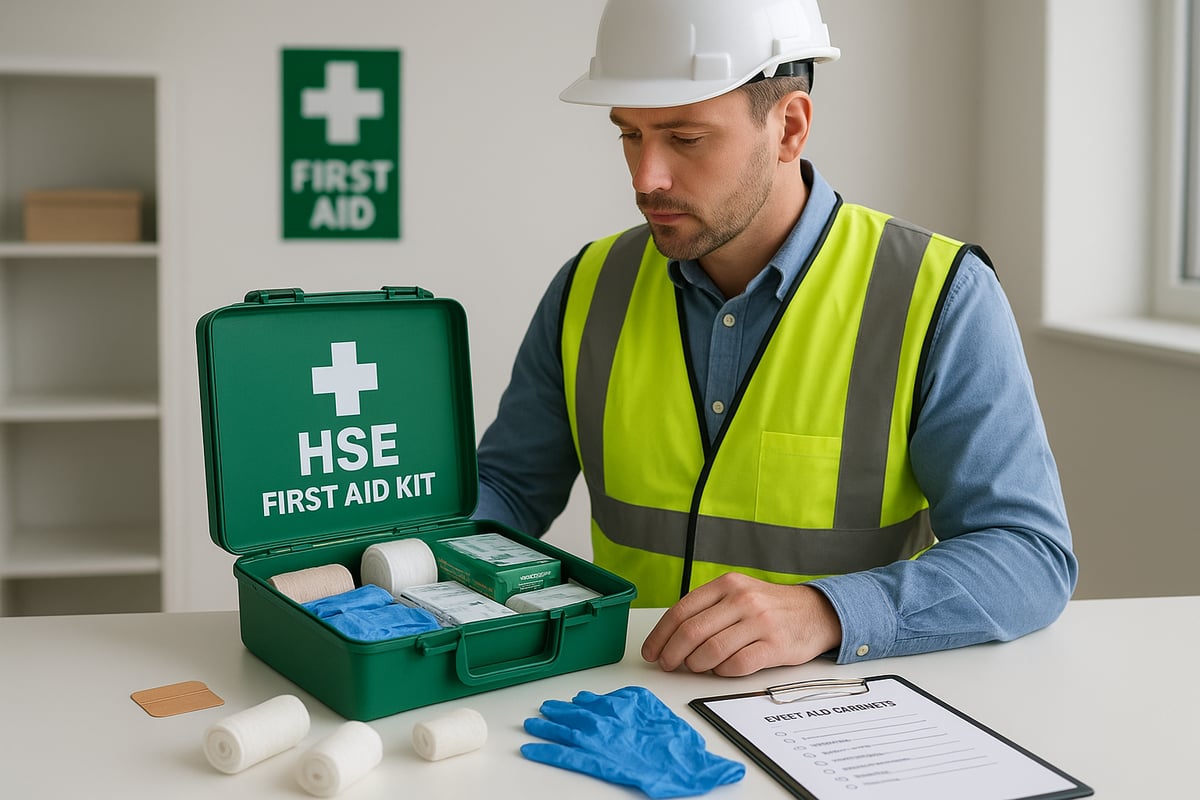
Across the UK, the standard British Standard (BS 8599-1) “green box” is a familiar fixture on warehouse walls and office corridors. While perfectly adequate for treating minor cuts, burns, and office-related abrasions, these conventional kits represent a critical failure point in high-hazard environments.
When workers operate heavy machinery, work at height, or manage remote agricultural sites, the potential injury severity escalates dramatically. Traditional kits lack the specialized equipment required to arrest arterial bleeds, stabilize compound fractures, or seal penetrating chest wounds.
In severe trauma events, survival hinges on the 3-5 minute hemorrhage window, during which an individual can exsanguinate from an uncontrolled arterial bleed long before emergency services arrive. In industrial and remote UK locations, average ambulance response times can extend significantly past this survival threshold.
Closing this critical gap requires empowering on-site colleagues as an immediate responder, equipped with gear engineered for catastrophic injuries. Aligning these advanced interventions with broader occupational health and workplace safety policies ensures businesses protect their most vulnerable field workers.
Standard UK Green Box vs. Modular Workplace Trauma Kit (IFAK)
| Equipment Type | Primary Clinical Function | Hemorrhage Control Speed | Ideal Risk Environment |
| Standard BS 8599-1 Green Box | Basic first aid: minor surface wounds, blisters, sprains, and eye irrigation. | Slow to ineffective; relies on low-absorbency dressings and adhesive bandages. | Low-risk offices, retail stores, and standard classrooms. |
| Modular Workplace Trauma Kit (IFAK) | Advanced life support: arterial hemorrhage control, airway adjuncts, and chest seals. | Immediate; deployed within seconds via ratchet-driven tourniquets and hemostatic gauze. | Heavy manufacturing, construction sites, forestry, and remote field operations. |
Core Anatomy of an Modern Workplace IFAK and Trauma System
Upgrading occupational safety protocols for remote job sites or machinery-heavy facilities requires transitioning from basic adhesive dressings to specialized hemorrhage-control gear. Modern safety standards favor modular, standardized medical configurations—such as the advanced IFAK trauma kits engineered by emergency response manufacturers like Rhino Rescue—to ensure that critical life-saving components like ratchet-driven tourniquets, chest seals, and hemostatic gauze are systematically organized and accessible within seconds of an incident.
Massive Hemorrhage Control: Tourniquets and Hemostatic Dressings
Uncontrolled extremity hemorrhage remains the primary cause of preventable death in industrial trauma scenarios. Conventional crepe bandages and gauze pads fail to provide the circumferential mechanical pressure necessary to occlude severed arteries.
- Mechanical Tourniquets: High-risk workplaces must provide ratchet-driven tourniquets or windlass systems capable of applying consistent arterial compression without structural failure.
- Hemostatic Gauze: For junctional wounds—such as the groin, axilla, or neck where tourniquets cannot be applied—dressings impregnated with chitosan or kaolin rapidly promote localized clotting.
- Emergency Trauma Bandages: Include elasticized pressure dressings with built-in pressure bars to apply direct, high-force mechanical compression over deep lacerations.
Modular MOLLE Design and Rapid-Deployment Mechanics
During a severe accident, panic and adrenaline severely impair fine motor control, making complicated pouches or disorganized bags a safety hazard. An effective industrial trauma system must utilize intuitive engineering that enables rapid identification and deployment.
- Quick-Release Systems: Pouch systems featuring tear-away Velcro panels allow the responder to detach the entire medical kit immediately with one hand.
- MOLLE Integration: Standardized modular webbing ensures trauma kits can be securely mounted to heavy plant machinery, work vehicles, or individual harnesses.
- Clamshell Internal Layouts: Opening flat to display all interventions in labeled, elastic retention loops prevents time lost rummaging through loose medical supplies.
Implementing a Triage and Massive Hemorrhage Protocol for Remote and Industrial Teams
Equipping an industrial site with advanced medical hardware is only effective if staff understand modern tactical trauma principles. Safety managers are increasingly replacing outdated civilian first-aid mnemonics with the standardized MARCH assessment protocol to prioritize lethal injuries correctly.
- M — Massive Hemorrhage: Prioritize arresting life-threatening arterial or venous bleeding immediately using tourniquets or hemostatic packing before any other action.
- A — Airway: Assess for and clear airway obstructions; deploy a nasopharyngeal airway (NPA) if the casualty is unconscious but breathing.
- R — Respiration: Treat penetrating thoracic trauma immediately with vented chest seals to prevent a lethal tension pneumothorax.
- C — Circulation: Assess general circulation, check secondary pulse points, and re-verify that all applied tourniquets remain tight and effective.
- H — Head & Hypothermia: Inspect for traumatic brain injuries and wrap the casualty in active or reflective thermal blankets to prevent the lethal coagulopathy of hypothermia.
Integrating this sequential triage framework into ongoing corporate risk management and facility safety protocols ensures consistency during high-stress industrial incidents.
Key Takeaways
| Area | Key Takeaway | Impact/Data |
| Liability & Risk | Scrap standard BS 8599-1 boxes for trauma | Arterial bleeds kill in 3-5 minutes |
| Hemorrhage Control | Mandate ratchet tourniquets and hemostatic gauze | Stops arterial bleeding before EMS arrives |
| Hardware Design | Standardize on quick-release MOLLE clamshell pouches | Enables one-handed instant deployment |
| Triage Protocol | Enforce MARCH framework over civilian first-aid | Prevents lethal pneumothorax and hypothermia |
| Compliance Audits | Inspect hydrogels, expiry dates, and UV damage | Proves HSE regulatory compliance |
Equipment Inspection, Rotational Maintenance, and HSE Compliance
Installing advanced medical hardware is only part of an effective workplace risk mitigation strategy; employers must also maintain ongoing procedural compliance. To ensure trauma gear remains effective and compliant with national occupational regulations, safety officers should routinely review their emergency provision policies against the official HSE workplace first aid guidance, verifying that both physical equipment and staff training meet the required risk assessment standards for high-hazard environments.
- Check Hydrogel Integrity: Regularly inspect vented chest seals and burn dressings, as fluctuating warehouse temperatures can dry out adhesive gels over time.
- Audit Expiration Dates: Hemostatic dressings and sterilized gauze carry strict sterility lifespans; implement a first-in, first-out rotational inventory system.
- Examine Polymer Strap Health: Tourniquets exposed to direct sunlight, vehicle vibration, or outdoor chemical fumes must be checked for micro-cracks and UV degradation.
- Document Verification Audits: Maintain digital or physical inspection logs for every trauma station, ensuring EHS managers can demonstrate proactive regulatory compliance.








Leave a Reply