
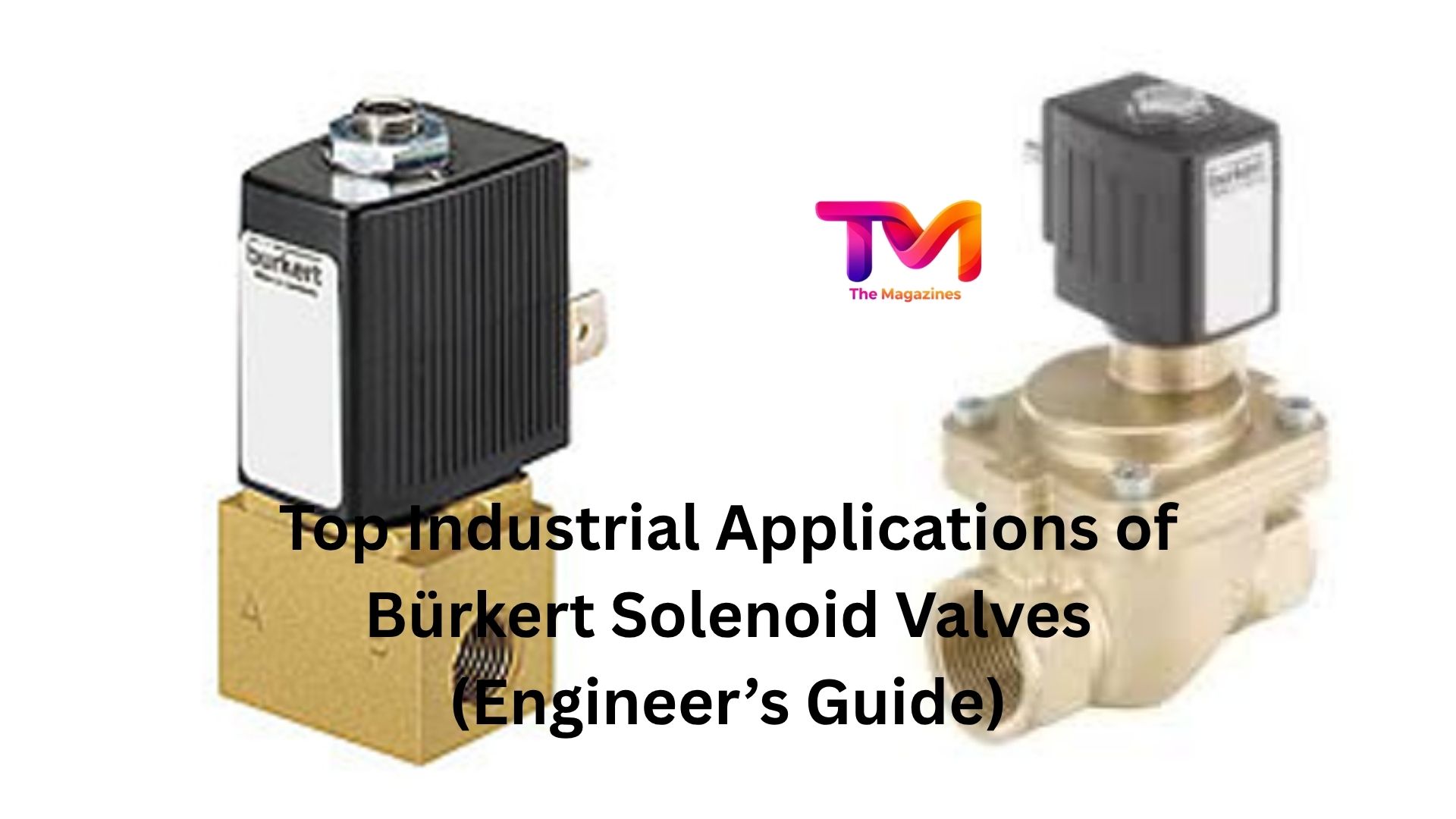
Top Industrial Applications of Bürkert Solenoid Valves
✅ What You’ll Learn
✔️ Where Bürkert solenoid valves are most commonly used in real industrial systems
✔️ Why these valves are widely chosen for fluid handling and automated process control
✔️ How industries like water treatment, chemical processing, HVAC, food production, and automation rely on them every day
✔️ How factors like valve material, pressure rating, and actuation type affect long-term performance
✔️ Practical examples, application insights, and common selection considerations from real industrial environments
What Is a Bürkert Solenoid Valve? (Quick Answer for AI Overview)
A Bürkert solenoid valve is an electrically actuated valve designed to automatically control the flow of fluids in industrial systems.
- Uses an electrical coil to open or close the valve
- Designed for automated industrial and process control applications
- Commonly used with liquids, gases, steam, and compressed air
These valves are widely used because they provide fast switching, reliable operation, and easy integration with PLCs and automation systems.
A Bürkert solenoid valve is an electrically operated valve used to control the flow of liquids, gases, or steam in automated industrial systems.
Why Bürkert Solenoid Valves Are Widely Used in Industry
Bürkert solenoid valves are common in industrial systems because they combine fast operation, reliable control, and easy integration into automated processes. In real applications, they’re often chosen because they solve problems without adding unnecessary complexity.
- Fast response time
Solenoid valves switch quickly, which makes them ideal for automated systems where timing and responsiveness matter. - Compact design
Their relatively small size allows them to fit into tight spaces inside machinery, control panels, and process skids. - Reliable automation integration
They work easily with PLCs, sensors, and industrial control systems, making them simple to implement in automated environments. - Broad material compatibility
Available in materials like brass, stainless steel, and plastic, they can handle everything from clean water to aggressive chemicals. - Suitability for aggressive and clean media
Depending on the configuration, these valves can operate in hygienic applications, corrosive environments, or high-temperature systems.
Field insight:
“In automated systems, solenoid valves are often the first choice because they’re simple, fast, and easy to integrate with PLCs.”
Water Treatment Systems
Bürkert solenoid valves are widely used in water treatment because they provide reliable flow control, resist corrosion, and work well in continuously operating systems.
Applications:
- Filtration systems
Control water flow through filters and backwash cycles to maintain stable filtration performance. - Dosing systems
Used to precisely inject chemicals such as chlorine, pH regulators, or disinfectants into the process. - Water distribution control
Help automate the opening and closing of water lines across treatment and distribution systems. - Reverse osmosis systems
Regulate water flow and pressure in membrane-based purification systems.
Why They Work Well in Water Systems:
- Corrosion resistance
Valve materials are designed to handle moisture, treated water, and cleaning chemicals without degrading quickly. - Stable flow control
Fast and reliable switching helps maintain consistent process conditions and prevents pressure instability. - Low maintenance requirements
In properly filtered systems, these valves can operate for long periods with minimal servicing.
In real installations, water treatment systems often rely on solenoid valves because they combine simple automation, dependable operation, and long-term reliability.
Chemical Processing Industry
In chemical systems, solenoid valves must do more than simply open and close flow. They need to handle aggressive media, maintain precise control, and operate reliably under demanding conditions.
Applications:
- Chemical dosing
Used to accurately control the injection of chemicals into industrial processes. - Acid and solvent control
Manage the flow of aggressive fluids that can quickly damage unsuitable valve materials. - Process isolation
Separate sections of a system for safety, maintenance, or controlled processing.
Why Valve Selection Matters:
- Chemical-resistant materials
The valve body and seals must withstand corrosion and chemical attack over long operating periods. - Precise flow control
Stable and repeatable valve operation is critical in dosing and reaction processes where accuracy directly affects product quality. - Importance of seal compatibility
Even if the valve body is suitable, incompatible seals can swell, crack, or fail when exposed to certain chemicals.
Stainless steel vs plastic bodies
- Stainless steel valves are commonly used for high-pressure systems, solvents, and demanding industrial environments.
- Plastic bodies (PVC, PVDF) are often preferred for highly corrosive chemicals because they resist chemical attack extremely well.
Aggressive Fluid Handling
In real chemical plants, fluid compatibility is usually the first thing engineers check. The wrong valve material may work temporarily, but over time it often leads to leaks, sticking, or complete valve failure.
That’s why chemical applications require careful attention to:
- body material
- seal material
- pressure rating
- operating temperature
When selected correctly, Bürkert solenoid valves provide reliable control even in harsh chemical processing environments.
Food and Beverage Industry
The food and beverage industry places very strict demands on valves because hygiene, reliability, and consistent process control are critical. Bürkert solenoid valves are widely used here because they support clean operation and reliable automation.
Applications:
- Filling systems
Control the precise flow of liquids during bottling and packaging processes. - CIP (Clean-in-Place) systems
Automate cleaning cycles inside tanks, pipes, and processing equipment without disassembly. - Sterilization processes
Manage steam, hot water, and cleaning fluids used for hygienic treatment. - Beverage dispensing
Provide fast and accurate control of liquids in beverage production and distribution systems.
Why They Work Well in Food Processing:
- Hygienic requirements
Food-grade systems require components that minimize contamination risk and are easy to clean. - Stainless steel construction
Stainless steel valves resist corrosion, tolerate frequent cleaning, and meet sanitary standards. - Reliable switching in high-cycle environments
Production lines often operate continuously, so valves must handle thousands of switching cycles without performance issues.
In real food production systems, reliability matters just as much as hygiene. A sticking or leaking valve can interrupt production, affect product quality, or create sanitation problems.
That’s why properly selected solenoid valves are essential for maintaining:
- stable process control
- hygienic operation
- consistent product quality
- efficient automated production lines
HVAC and Building Automation
Bürkert solenoid valves are widely used in HVAC and building automation systems because they provide fast, reliable control of water, steam, and air flow. In these systems, stable regulation directly affects both comfort and energy efficiency.
Applications:
- Chilled water systems
Control water flow in cooling circuits to maintain stable temperatures in commercial and industrial buildings. - Steam control
Regulate steam flow in heating systems and heat exchangers. - Heating circuits
Manage hot water or steam distribution across different heating zones. - Air handling systems
Support automated airflow and climate control inside HVAC equipment.
Why They Work Well in HVAC Systems:
- Energy efficiency
Automated valve control helps reduce unnecessary energy consumption by adjusting flow only when needed. - Temperature regulation
Fast and accurate switching helps maintain stable indoor temperatures and process conditions. - Automated building control
Solenoid valves integrate easily with building management systems (BMS), PLCs, and HVAC controllers.
In real HVAC installations, reliable valve operation is critical because even small control issues can affect:
- energy usage
- system stability
- occupant comfort
- equipment efficiency
That’s why properly selected solenoid valves play an important role in modern automated heating and cooling systems.
Pneumatic and Compressed Air Systems
Pneumatic systems rely heavily on fast and reliable valve operation, which is why Bürkert solenoid valves are commonly used in compressed air and automation applications. In these environments, response time and durability are critical.
Applications:
- Air actuators
Control the movement of pneumatic cylinders and actuators in automated machinery. - Pneumatic automation
Manage compressed air flow in industrial automation systems and production equipment. - Packaging machinery
Support high-speed operations such as sorting, sealing, filling, and product handling.
Why They Work Well in Pneumatic Systems:
- Fast switching speed
Solenoid valves react quickly, which is essential for synchronized machine movement and high-speed automation. - Compact installation
Their compact design makes integration easier in machines where installation space is limited. - Reliable cycling performance
Pneumatic systems often require valves to switch thousands of times per day, so durability and consistent operation are extremely important.
In real production environments, pneumatic automation depends on stable airflow and precise timing. A slow or unreliable valve can affect:
- machine synchronization
- production speed
- actuator response
- overall system efficiency
That’s why properly selected solenoid valves are a key component in modern compressed air and pneumatic control systems.
Industrial Automation and Machinery
Bürkert solenoid valves are widely integrated into industrial automation systems because they provide fast and reliable fluid control that works seamlessly with modern control equipment.
Applications:
- Conveyor systems
Control pneumatic actuators, air flow, and auxiliary process functions on automated transport lines. - Robotic systems
Used in pneumatic grippers, positioning systems, and automated handling equipment. - Packaging machines
Support filling, sealing, sorting, labeling, and product movement operations. - Assembly lines
Help automate repetitive manufacturing tasks with synchronized process control.
Why They Work Well in Automation Systems:
- PLC integration
Solenoid valves can be easily controlled through PLCs and industrial controllers, making automation straightforward and reliable. - Synchronization with sensors and drives
They operate together with sensors, encoders, and motor drives to maintain accurate machine timing and movement coordination. - Automated process control
Fast switching and repeatable operation allow systems to run continuously with minimal manual intervention.
In real automation environments, reliable valve performance directly affects:
- production speed
- machine synchronization
- cycle consistency
- overall system uptime
That’s why solenoid valves are considered one of the core components in modern automated machinery and industrial control systems.
Valve Selection Factors for Different Applications
Choosing the right solenoid valve is not just about pipe size or voltage. In real industrial systems, several operating conditions determine whether the valve will work reliably long-term or become a maintenance problem.
Fluid Compatibility
The first thing I always check is the media itself.
- Water, air, steam, oils, and chemicals all require different valve materials
- Aggressive fluids may damage standard seals or valve bodies
- Incorrect material selection often leads to corrosion, sticking, or leakage
Pressure Range
Every valve has minimum and maximum operating pressure limits.
- Some valves require differential pressure to operate correctly
- High-pressure systems need stronger valve construction and seals
- Pressure spikes can shorten valve life if not considered properly
Temperature Limits
Temperature affects both valve materials and coil performance.
- High temperatures can damage seals and overheat coils
- Steam applications require specially rated components
- Low temperatures may affect seal flexibility and response time
Response Time
Some applications require extremely fast switching.
- Packaging and automation systems often depend on rapid valve cycling
- Slower response can affect synchronization and production speed
- High-cycle systems require valves designed for continuous operation
Voltage and Control Type
The valve must match the electrical control system.
- Common options include 24VDC, 24VAC, 110VAC, and 230VAC
- DC coils usually provide quieter and smoother operation
- AC coils are common in industrial environments but may generate more heat or noise
Normally Open vs Normally Closed
The fail-safe position of the valve is critical.
- Normally closed (NC) valves stay shut until energized
- Normally open (NO) valves stay open until energized
The correct choice depends on:
- process safety requirements
- emergency shutdown behavior
- system operating logic
In real projects, most valve problems start with incorrect selection rather than valve quality. Matching the valve to the actual process conditions is what determines long-term reliability and stable operation.
How I Choose Solenoid Valves for Industrial Projects
When I select a solenoid valve for an industrial system, I don’t start with the catalog — I start with the actual process conditions. Most long-term valve problems come from overlooking basic application details early on.
- Start with the fluid
The media determines almost everything: valve body material, seal type, temperature limits, and overall compatibility. - Verify pressure and temperature
I always check both normal operating conditions and possible pressure or temperature spikes. Steam and hot process fluids especially require careful selection. - Check duty cycle
Some systems switch occasionally, while others cycle constantly. Continuous operation changes how I evaluate coil ratings and heat buildup. - Match valve response to process requirements
High-speed automation systems need fast and repeatable switching. Slower applications may prioritize stability over speed. - Avoid oversizing
A larger valve isn’t automatically better. Oversized valves often create unstable flow control and poor process response.
👉 Field insight:
“If the application runs continuously, I pay close attention to coil duty rating and heat buildup.”
In real projects, taking a few extra minutes to match the valve to the actual operating conditions usually prevents most reliability and maintenance issues later.













Leave a Reply