
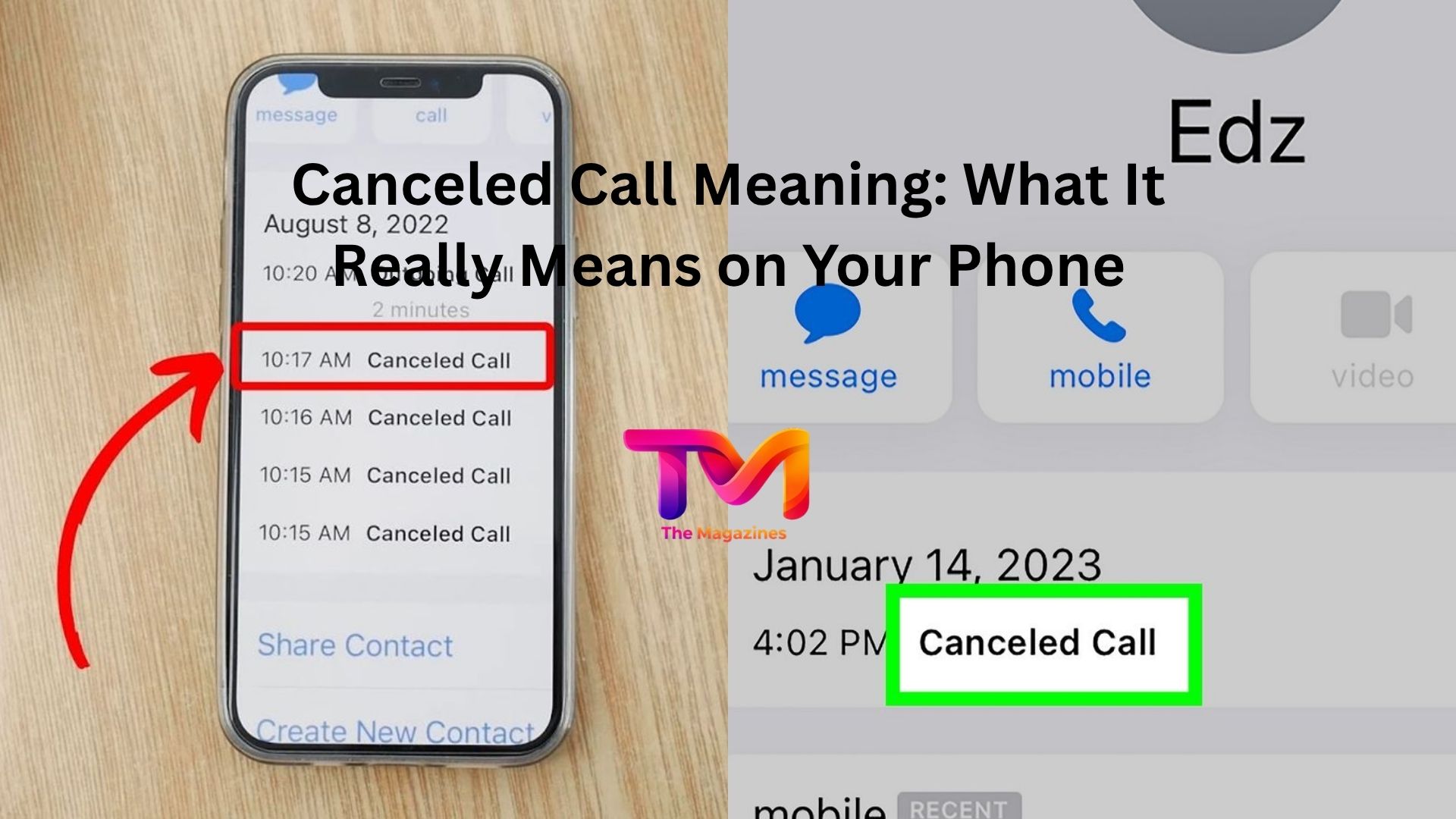
You glance at your phone and notice a call marked as “Canceled Call.” Suddenly, questions start popping up.
Did the other person hang up?
Did they try calling and change their mind?
Was it a network issue?
Or did something happen on your end?
It’s a small notification, yet it often creates a surprising amount of confusion. Most people see it at least once and immediately wonder what actually happened behind the scenes.
The tricky part is that a canceled call doesn’t always mean the same thing across every device and app. The meaning can vary slightly depending on whether you’re using an iPhone, Android phone, FaceTime, WhatsApp, or another calling service.
Understanding it is easier than most people think. Once you know how call systems work, that mysterious label starts making perfect sense.
Table of Contents
- What Does Canceled Call Mean?
- How a Canceled Call Happens
- Canceled Call vs Missed Call
- Canceled Call on iPhone
- Canceled Call on Android
- What Does a Canceled FaceTime Call Mean?
- Can Someone See That You Called Them?
- Common Reasons Calls Get Canceled
- Does a Canceled Call Mean Someone Hung Up?
- Should You Call Back?
- How to Avoid Accidental Canceled Calls
- Final Thoughts
What Does Canceled Call Mean?
A canceled call usually means the person who initiated the call ended it before the recipient answered.
In simple terms, the call started but wasn’t completed.
Imagine you’re about to call a friend. You tap their number, the phone begins ringing, and then you suddenly remember it’s late at night. You quickly end the call before they answer.
That action typically creates a canceled call record.
The important detail is that the call never connected. No conversation took place. The caller stopped the call before it was answered.
Many smartphones display this event as a canceled call rather than a completed or missed call.
How a Canceled Call Happens
The process is actually pretty straightforward.
A caller presses the call button.
The network begins trying to connect both phones.
Before the receiver answers, the caller hangs up.
That’s it.
The system records the attempt but notes that the caller canceled before a connection occurred.
Think of it like knocking on someone’s door and walking away before they open it.
You made contact, but not enough to have an interaction.
Sometimes the cancellation happens after only one ring. Other times the phone rings several times before the caller ends it.
Either way, the result is generally the same.
Canceled Call vs Missed Call
This is where many people get confused.
A canceled call and a missed call aren’t identical.
A missed call usually means the phone rang and the recipient didn’t answer before the call ended.
A canceled call often emphasizes the action of the caller ending the call before it connected.
The difference can seem small, but it’s useful.
For example, let’s say Sarah calls Mike.
If Sarah hangs up after two rings because she realizes she dialed the wrong number, that may appear as a canceled call.
If Sarah lets the phone ring for thirty seconds and Mike never answers, it may show as a missed call.
Different phone systems sometimes blur these definitions, which explains why users occasionally see varying labels for similar situations.
Canceled Call on iPhone
iPhone users frequently notice canceled calls in their recent call history.
Apple typically labels outgoing calls as “Canceled” when the caller hangs up before the call is answered.
Let’s say you accidentally tap someone’s contact.
You immediately press the red button.
When you check your call log later, you’ll likely see that attempt listed as a canceled call.
Many people worry when they see this because they assume the recipient knows exactly what happened.
The reality is simpler.
If the call reached the other phone before cancellation, the recipient may see a missed call notification.
If it ended extremely quickly, they might not notice anything at all.
Network timing plays a role.
Canceled Call on Android
Android devices generally behave similarly, although wording can vary depending on the manufacturer.
Samsung, Google Pixel, Xiaomi, OnePlus, and other Android brands sometimes use slightly different labels.
You might see:
- Canceled
- Outgoing canceled
- Call canceled
- Dialed but not connected
The underlying meaning remains largely the same.
The call was initiated but ended before a successful connection.
Because Android manufacturers customize their software, the exact appearance of call logs can differ from one phone to another.
That’s why two people can experience the same event yet see different descriptions.
What Does a Canceled FaceTime Call Mean?
FaceTime adds another layer to the discussion.
A canceled FaceTime call usually means the caller ended the FaceTime request before the recipient answered.
Maybe they realized they were calling the wrong person.
Maybe they lost confidence about making the call.
Maybe they simply changed their mind.
We’ve all been there.
You hit the call button and immediately think, “Actually, I’ll text instead.”
The FaceTime request gets canceled before a connection occurs.
On the recipient’s side, they may still receive a notification showing that someone attempted to contact them.
Exactly what they see depends on timing and device settings.
Can Someone See That You Called Them?
Often, yes.
This is probably one of the most common questions people ask.
Suppose you accidentally call someone and hang up within a second.
Will they know?
Possibly.
If the call reached their network and triggered a notification, they may see a missed call or call attempt.
If the cancellation happened almost instantly, they might never receive any indication.
Unfortunately, there isn’t a universal answer because mobile carriers, phone models, and network speeds all affect the outcome.
A useful rule of thumb is this:
If the phone rang on your screen for even a brief moment, there’s a chance the recipient was notified.
Common Reasons Calls Get Canceled
Most canceled calls aren’t dramatic.
They’re usually the result of ordinary situations.
Accidental taps are incredibly common. Smartphones make calling easy, which also makes mistakes easy.
Another reason is second thoughts.
Someone intends to call, then decides texting would be better.
Network instability can also play a role. In rare situations, connectivity issues interrupt the call setup process before a connection is established.
Busy schedules create canceled calls too.
Imagine you’re about to call your boss when another urgent task appears. You end the call and plan to try later.
Then there’s the classic “pocket dial panic.”
You notice a call starting from inside your pocket and quickly stop it before anything happens.
Technology records all of these moments.
Does a Canceled Call Mean Someone Hung Up?
Not necessarily.
Here’s where assumptions can lead people in the wrong direction.
Seeing a canceled call doesn’t automatically mean someone intentionally rejected you.
People often interpret it emotionally.
“He canceled the call. Maybe he’s upset.”
“She hung up before I answered.”
Those conclusions aren’t always accurate.
Many canceled calls occur by accident.
Others happen because someone realized they called the wrong contact.
Sometimes a caller simply decides the timing isn’t right.
Without additional context, it’s impossible to know the reason behind a canceled call.
That’s why it’s usually best not to overthink it.
One canceled call tells you very little about someone’s intentions.
Should You Call Back?
In many situations, yes.
A canceled call isn’t a clear message that someone doesn’t want to talk.
If the person matters to you and the call seems important, calling back is perfectly reasonable.
Let’s say your sibling accidentally canceled a call.
Calling them back could solve the mystery in seconds.
The same applies in professional settings.
If a client, coworker, or employer appears in your call history, returning the call is often the simplest solution.
Of course, context matters.
If the canceled call happened at midnight, waiting until morning may be wiser.
A little common sense goes a long way.
How to Avoid Accidental Canceled Calls
Modern phones make accidental calls surprisingly easy.
A few small habits can help.
Lock your phone before putting it in your pocket.
Double-check contact selections before pressing the call button.
Use favorite contacts carefully if they’re located near frequently used apps.
Many people also enable screen-lock features that reduce unintended touches.
The goal isn’t perfection.
It’s simply reducing those awkward moments when you suddenly realize you’ve almost called someone you haven’t spoken to in five years.
Most smartphone users experience that at least once.
Usually more than once.
Final Thoughts
The meaning of a canceled call is much less mysterious than it first appears.
In most cases, it simply means a call was started but ended before the recipient answered. The caller canceled the attempt before a conversation could begin.
Whether you’re using an iPhone, Android device, FaceTime, or another calling platform, the basic idea stays largely the same.
The key thing to remember is that a canceled call doesn’t automatically reveal intent. It doesn’t necessarily mean rejection, avoidance, or anything personal. Sometimes it’s an accidental tap. Sometimes it’s a change of plans. Sometimes it’s nothing more than a brief moment of hesitation.
So the next time you spot “Canceled Call” in your call history, you’ll know exactly what it means—and probably won’t spend the next ten minutes wondering about it.














Leave a Reply