
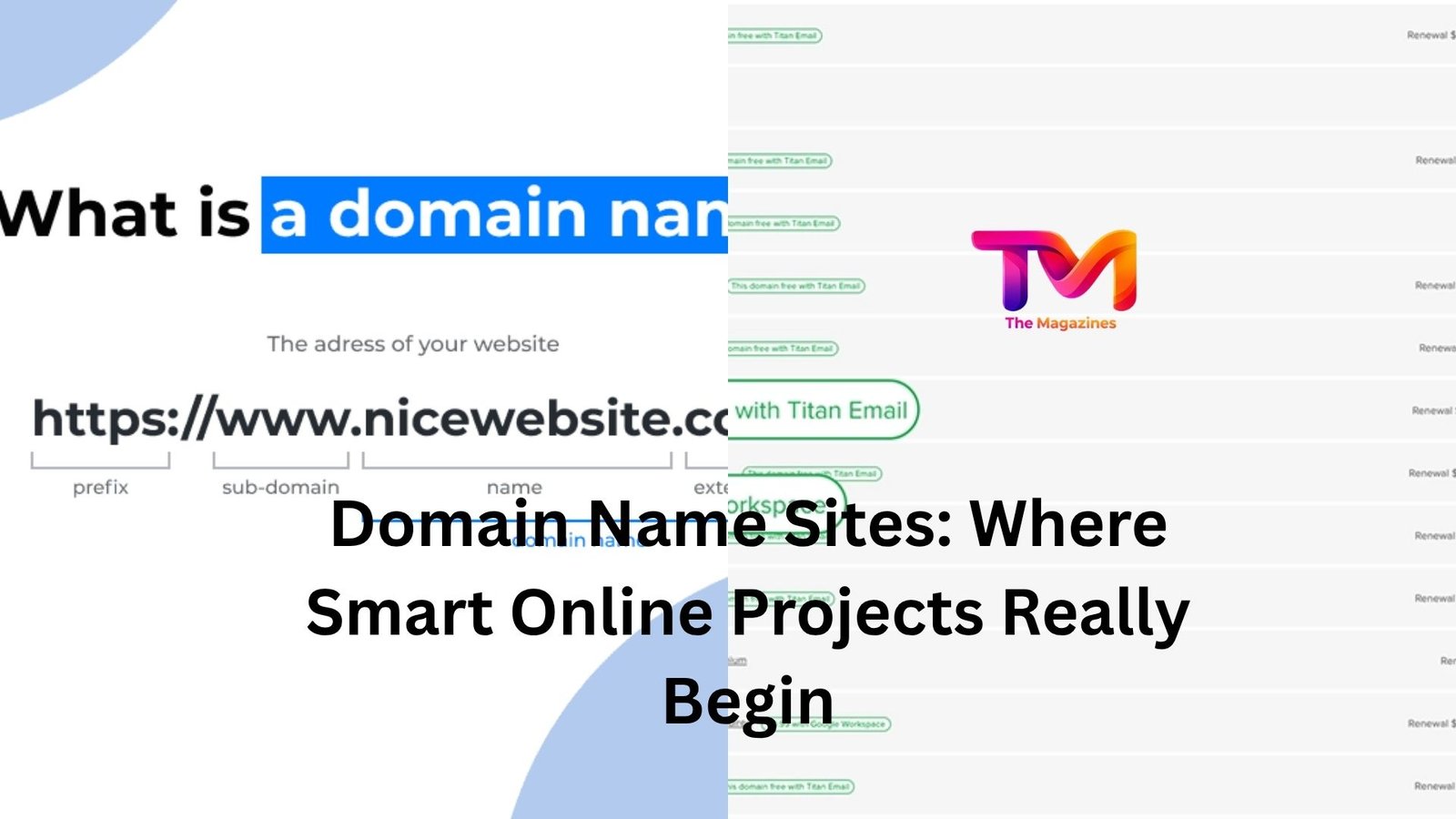
There’s a moment that hits right before any website goes live. You’ve got the idea, maybe even the design sketched out, and then it stops cold on one simple question: what’s the name?
That’s where domain name sites step in—and honestly, they matter more than most people think. The right platform doesn’t just help you grab a name. It shapes how easy your whole online journey feels from day one.
Let’s get into what actually matters here, beyond the obvious “buy a domain and move on.”
Why the Domain Name Step Feels Bigger Than It Should
Picking a domain sounds simple. Type it in, hit search, hope it’s available. Done.
Except it rarely goes that way.
You try your idea. It’s taken. You tweak it. Still gone. You add a word. Now it sounds weird. Suddenly you’re 20 minutes deep, questioning your brand, your creativity, maybe even your entire project.
That’s not just you. Good domain name sites make this process smoother—not perfect, but far less frustrating.
The difference shows up in how they suggest alternatives, how fast they search, and whether they actually help you think, not just type.
I once watched a friend try to name a small coffee blog. What should’ve taken five minutes turned into an hour of “what about this?” because the site he used kept throwing irrelevant suggestions. When he switched platforms, he found something clean and available in under ten minutes.
That’s the kind of difference we’re talking about.
What Actually Makes a Domain Name Site Worth Using
Not all domain sites are built the same, even if they look similar on the surface.
Some feel like outdated search engines. Others feel more like creative tools.
The good ones do a few things quietly well.
They’re fast. You don’t wait around for results.
They’re smart about suggestions. Not random word mashups, but names that actually make sense.
They show availability clearly. No guessing, no clicking through five pages to confirm.
And they don’t overwhelm you with upsells the second you show interest.
Now, let’s be honest—most domain sites will try to sell you extras. Hosting, email, privacy protection. That’s normal. But there’s a difference between offering and pushing. You feel it immediately.
If a site makes you hesitate or double-check every step, it’s not doing its job.
The Quiet Importance of Domain Extensions
This part doesn’t get enough attention.
Everyone knows about “.com.” It’s still the default. Still trusted. Still what most people type without thinking.
But here’s the thing—good domain name sites don’t just show you .com options. They help you explore alternatives that actually make sense.
Think about it. A design portfolio might feel sharper with a .studio or .design. A tech project could work with .io. A local service might even benefit from something location-specific.
The trick is not getting carried away.
There’s a fine line between creative and confusing. If someone hears your domain name once and can’t remember how to type it, that’s a problem.
Strong domain sites help you stay on the right side of that line. They don’t just offer options—they help you judge them.
Pricing: Where Things Get a Little Messy
Here’s where people often get caught off guard.
You find a domain for a low price—sometimes incredibly low—and it feels like a win. Then renewal time hits, and suddenly it costs two or three times more.
That’s not unusual. It’s actually pretty standard.
Good domain name sites are at least transparent about this. They show renewal pricing clearly, not buried somewhere you have to dig for.
Still, it’s worth paying attention.
If you’re planning a long-term project—and most people are—you’re not buying a domain for one year. You’re committing to it.
I’ve seen people build entire brands around a domain, only to get annoyed later when renewal costs feel like a surprise bill. It’s avoidable if you check upfront.
The Search Experience Matters More Than You Expect
This is where things get interesting.
A lot of domain name sites now act almost like idea generators. You type in a rough concept, and they start spinning out variations.
Some of those are useless. But sometimes, you’ll see something you wouldn’t have thought of—and it clicks instantly.
That’s the moment you want.
It’s not just about availability. It’s about discovery.
A good search tool feels like brainstorming with someone who’s fast and doesn’t run out of ideas.
A bad one feels like scrolling through noise.
There’s no perfect system here, but better platforms clearly stand out once you’ve tried a few.
Security and Ownership—Not the Exciting Part, But Crucial
This isn’t the fun side of domain name sites, but it’s where mistakes can hurt.
When you buy a domain, you’re not just picking a name—you’re securing a piece of digital property. If something goes wrong with access or ownership, it can get messy fast.
Reliable domain sites make this part simple.
They offer domain locking, easy access to DNS settings, and clear ownership records. Nothing hidden, nothing confusing.
If a platform makes it hard to understand who controls your domain or how to manage it, that’s a red flag.
It might not matter on day one. But six months in, when you’re updating something or moving platforms, it suddenly matters a lot.
When Bundles Help—and When They Don’t
Most domain name sites will try to bundle services. Hosting, email, website builders—it’s all right there.
Sometimes that’s genuinely helpful.
If you’re starting from scratch and want everything in one place, it can save time and mental energy. You don’t have to connect multiple services or figure out technical details right away.
But here’s the flip side.
Bundling can also lock you in.
Switching later becomes harder. Pricing can creep up. Flexibility shrinks.
So it really comes down to how you plan to use your domain.
If it’s a simple personal site or a quick project, bundling might be the easiest route.
If you’re building something bigger or more flexible, keeping your domain separate from hosting often gives you more control.
The Subtle Role of Branding
This part doesn’t get talked about enough.
A domain name isn’t just a technical requirement—it’s often the first impression.
It shows up in search results. It’s spoken out loud. It’s shared in messages.
And people judge it quickly, even if they don’t realize they’re doing it.
Domain name sites that help you visualize this—through previews or simple tools—give you an edge.
You start thinking less like “is this available?” and more like “does this feel right?”
There’s a difference.
A slightly longer name that’s clear and natural often beats a short one that’s confusing or forced.
The best platforms nudge you toward that kind of thinking without making it complicated.
Customer Support: You Won’t Care Until You Really Do
Most people ignore support when choosing a domain site.
Fair enough. You don’t expect to need it.
But when something breaks—or even just gets confusing—you suddenly care a lot.
Maybe your domain isn’t connecting to your site. Maybe email isn’t working. Maybe you just can’t find a setting that should be obvious.
That’s when good support stands out.
Quick responses. Clear answers. No endless back-and-forth.
It’s not something you think about upfront, but it’s one of those things that quietly separates solid platforms from frustrating ones.
So, Which Domain Name Site Should You Use?
There isn’t one perfect answer.
Different platforms shine in different ways. Some are better for beginners. Some are better for bulk domain buying. Some focus on clean user experience. Others lean into pricing or advanced tools.
What matters more is how the site fits your situation.
If you want speed and simplicity, look for something intuitive.
If you care about long-term flexibility, pay attention to management tools and transfer options.
If you’re still figuring out your idea, prioritize strong search and suggestion features.
The best choice isn’t universal—it’s practical.
A Simple Way to Approach It
Here’s a grounded way to think about domain name sites.
Don’t over-optimize.
Pick a platform that feels easy to use, shows pricing clearly, and gives you decent suggestions. Secure your domain. Then move forward.
Spending hours comparing every feature rarely changes the outcome in a meaningful way.
Your project matters more than the platform you used to buy the name.
The Takeaway
Domain name sites aren’t just marketplaces—they’re the starting point of your online presence.
A good one makes the process feel smooth, maybe even a little enjoyable. A bad one turns it into friction you don’t need.
Focus on clarity, ease of use, and transparency. Don’t get pulled too far into endless options or clever tricks.
At the end of the day, the goal is simple: find a name that fits, secure it without hassle, and get on with building something that actually matters.
That’s where the real work—and the real reward—begins.












Leave a Reply