
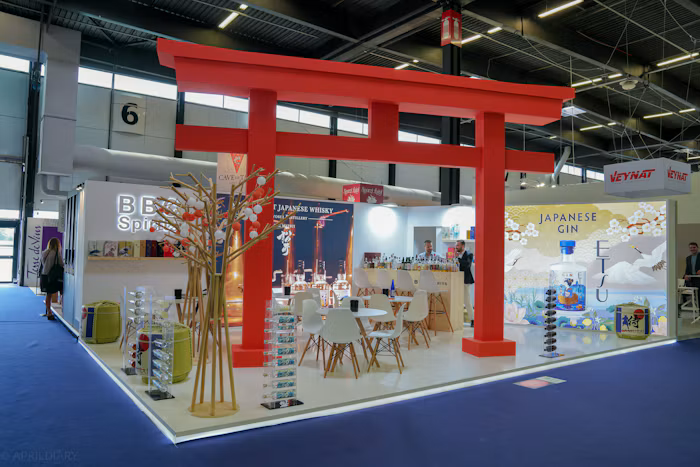
The Hidden Costs of In-House Event Management for Cross-Border Expansions
Cross-border market entry across the European Union offers unprecedented access to mature B2B buyer ecosystems. However, corporate expansion strategies often stumble when translating digital momentum into physical event activations.
Managing an overseas trade show presence in-house routinely looks manageable on a preliminary spreadsheet. Yet, operational reality reveals structural cost multipliers that quickly erode projected margins.
The primary driver of budget overruns is logistical friction. Non-EU enterprises frequently face unexpected customs delays, cross-border freight surcharges, and the administrative burden of ATA Carnet compliance.
When freight shipments are delayed at port entry points or fail customs clearance due to improper documentation, teams must absorb emergency local drayage fees. These spot rates often command a 200% to 300% premium over scheduled freight.
Beyond freight volatility, internal event management inflicts an acute human capital drag. High-performing marketing directors and enterprise account executives spend critical working hours navigating foreign venue regulations instead of closing business.
Operational missteps during international deployments compound rapidly:
- Unbudgeted storage fees assessed by European exhibition centers for early delivery or late retrieval.
- Penalties levied for failing to adhere strictly to rigid, venue-specific move-in and breakdown windows.
- Inefficient currency conversions and foreign transaction fees across multiple short-term sub-tier suppliers.
- Severe productivity losses incurred when revenue-generating staff perform manual site-coordination tasks.
Why Outsourcing Physical Branding is the New Standard
To bypass these operational bottlenecks, enterprise brands are shifting toward Business Process Outsourcing (BPO) models for experiential marketing deployments. Treating physical event infrastructure as an outsourced operational asset mitigates cross-border execution risk.
Research indicates that coordinating international logistics internally distracts go-to-market teams from their primary objective: high-value client engagement. To secure brand consistency without straining overhead, global enterprises rely on turnkey partners like Aplus Expo to execute end-to-end European booth builds locally. This integrated outsourcing model eliminates multilingual friction, aligns fabrication with regional technical codes, and guarantees seamless on-site delivery.
Decentralized physical branding introduces unneeded operational exposure. In contrast, partnering with a centralized execution provider establishes institutional accountability. Strategic managers gain predictable pricing models, audited vendor networks, and uniform visual standards across major exhibition hubs such as Frankfurt, Paris, Bologna, and Amsterdam.
Navigating Local Labor Unions and Venue Compliance
European exhibition venues enforce rigid regulatory frameworks that vary significantly across regional borders. Venues like Messe Frankfurt, Fira Barcelona, and Paris Nord Villepinte operate under strict health, environmental, and labor mandates.
Navigating these requirements without a localized presence exposes enterprises to immediate compliance stops. Hall managers frequently issue stop-work orders if electrical layouts, structural load distributions, or fire-retardant material ratings fail to match regional norms.
Specific compliance hurdles that centralized partners absorb include:
- Fire-Safety Certification: Enforcing material classifications such as DIN 4102 B1 or EN 13501-1 for all textiles, timber, and wall substrates.
- Union Regulations: Coordinating certified electrical, rigging, and mechanical trade professionals under strict national labor agreements.
- Environmental Directives: Adhering to EU waste-reduction frameworks and venue-level recyclable material requirements.
- Site Health & Safety: Filing mandatory risk assessments, static calculations, and certified liability insurance documentation well in advance of site access.
Securing a dedicated, regional point of contact eliminates coordination gridlock between local union stewards and corporate headquarters.
3D Visualization Before Capital Execution
A core vulnerability in international event marketing is the spatial mismatch between architectural booth designs and physical venue infrastructure. Deploying capital before validating spatial realities creates costly, emergency modifications on the show floor.
Advanced spatial dynamics workflows resolve this issue through photorealistic 3D visualization. Engineering teams generate dimensionally accurate digital environments reflecting the exhibition hall’s exact pillar locations, clearance limits, and utility trenches.
This pre-production phase allows distributed leadership teams to audit traffic velocity, meeting room acoustics, and sightlines from primary hall aisles. Corporate stakeholders can approve structural aesthetics, modular product demo zones, and integrated hardware before procurement begins.
Eliminating guesswork before fabrication prevents cross-border shipping errors, lowers material waste, and ensures complete design fidelity prior to physical installation.
Centralizing Supply Chains to Protect Margins
Managing disparate contracts introduces operational risks:
- Administrative waste driven by processing multiple cross-border invoices, tax reconciliations, and currency exchanges.
- Systemic accountability gaps, where separate audiovisual, printing, and rigging vendors blame each other for interface failures.
- Unpredictable spot pricing for standard rentals, such as LED walls, structural trusses, and bespoke furnishings.
- Heightened liability exposure due to gaps in regional workers’ compensation or equipment insurance coverages.
Embracing vendor consolidation under a centralized operational umbrella restores balance sheet control. A single provider coordinates localized fabrication, AV system integration, and on-site build crews under a master service agreement.
Furthermore, centralized infrastructure models unlock multi-event modularity. Instead of discarding custom physical branding after a three-day exhibition, modular components are securely cataloged, inspected, and stored at regional European distribution hubs.
This multi-city asset management model enables companies to repurpose primary structural assets across roadshows in Munich, Milan, and London. Amortizing capital expenditure across sequential events substantially lowers cost per lead over the fiscal year.
Measuring the True ROI of Outsourced Experiential Marketing
Executive teams must look beyond vanity metrics like raw booth footfall or superficial badge scans to determine the value of event marketing. Sophisticated organizations evaluate international activations through direct commercial outcomes and operational cost containment.
Understanding the true return on investment requires looking past superficial vanity metrics like total badge scans, and evaluating the internal operational hours saved through outsourcing. According to McKinsey’s research on B2B sales strategies, omni-channel approaches that strategically combine digital lead generation with high-impact, face-to-face interactions at industry events yield the highest close rates for complex enterprise deals, especially when internal teams are freed from logistical burdens.
When operations run efficiently in the background, commercial teams can focus entirely on pipeline velocity and executive networking.
Measuring the performance of outsourced event logistics relies on clear efficiency and financial indicators:
- Operational Hours Reclaimed: Calculating the internal engineering and marketing hours diverted from logistical trouble-shooting back to customer-facing work.
- Variance Against Baseline: Comparing total delivered cost against original budgets, tracking the elimination of emergency freight fees and on-site union penalties.
- Asset Amortization Rate: Calculating the cost-per-use decline of modular exhibition structures over a multi-city European calendar.
- Sales Pipeline Velocity: Measuring the speed at which qualified enterprise leads advance through CRM stages following scheduled on-site consultations.
By outsourcing trade show execution to proven regional specialists, expanding enterprises eliminate cross-border logistical hazards, protect operational margins, and turn European event appearances into predictable growth engines.









Leave a Reply