
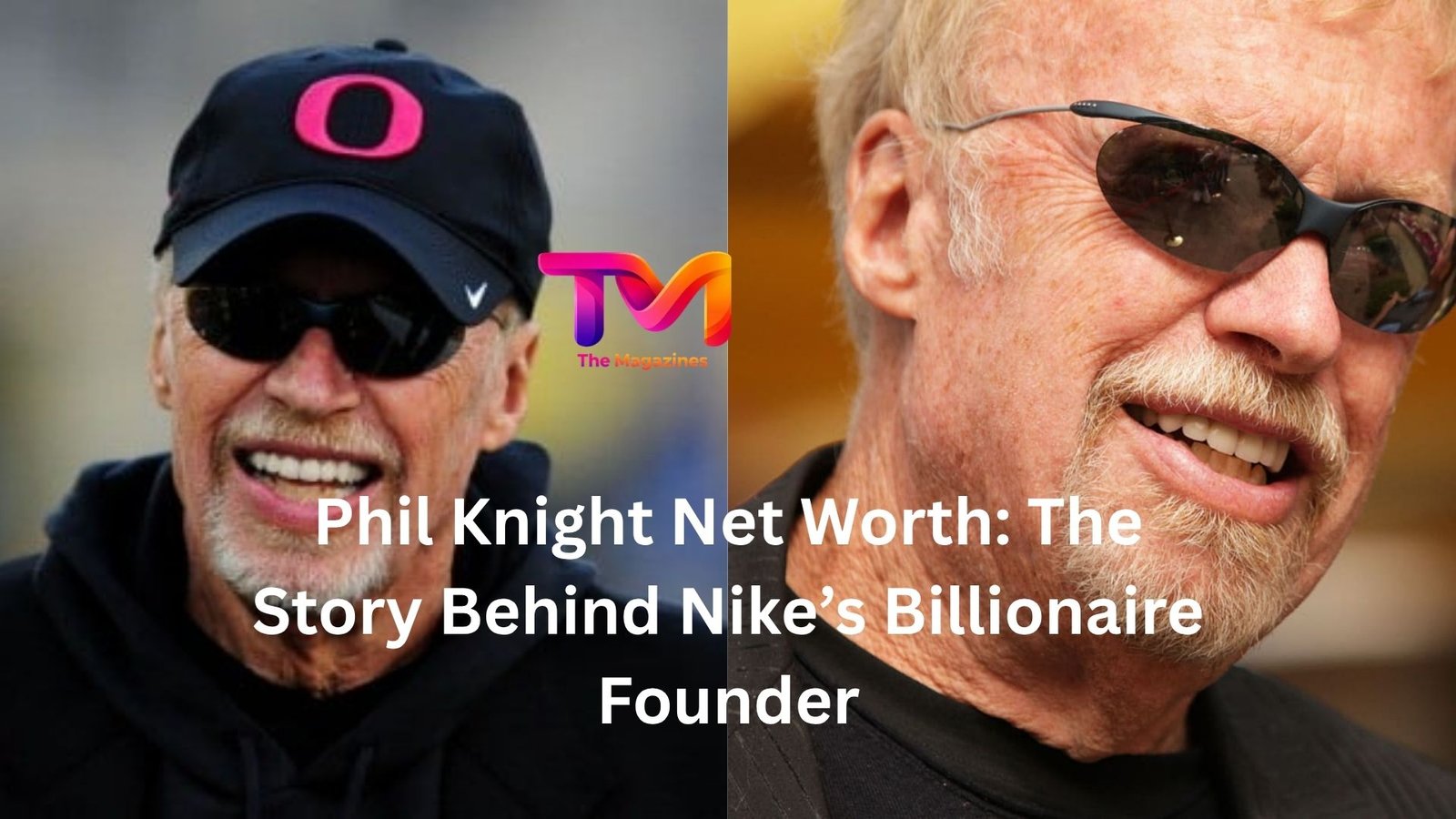
Phil Knight’s net worth sits comfortably in the tens of billions, but that number only makes sense once you understand how it came to be. It didn’t start with big money, or even a clear plan. It started with a guy selling running shoes out of the trunk of his car, hoping people would care about better footwear.
That contrast—between scrappy beginnings and massive wealth—is what makes Knight’s story worth paying attention to. Not because it’s flashy, but because it’s oddly grounded for someone who helped build one of the most recognizable brands in the world.
How Much Is Phil Knight Worth Today?
Phil Knight’s net worth typically hovers around $40–45 billion, depending on Nike’s stock price. That’s the key detail. His wealth isn’t sitting in a bank account—it’s tied to Nike.
He co-founded the company in 1964 (originally called Blue Ribbon Sports), and even after stepping down as chairman, he’s remained one of the largest shareholders. So when Nike does well, his net worth climbs. When it dips, his wealth takes a hit too.
Think of it like owning a big piece of a house in a hot market. You’re “worth” more on paper when prices rise, but nothing really changes unless you sell.
Knight rarely sells.
From Track Runner to Shoe Hustler
Knight wasn’t born into massive wealth. He grew up in Oregon, went to Stanford for business school, and came up with a simple idea: import high-quality running shoes from Japan and sell them in the U.S. at a better price than the German brands dominating the market at the time.
That idea turned into Blue Ribbon Sports.
In the early days, it wasn’t glamorous. Picture this: a young guy driving to track meets, popping open his trunk, and pitching shoes directly to athletes. No storefront. No brand recognition. Just hustle.
That kind of beginning matters. It shaped how Knight thought about risk, growth, and control. He wasn’t trying to build a lifestyle business. He was chasing scale from the start—even if he didn’t fully realize it.
The Nike Breakthrough
The shift from Blue Ribbon Sports to Nike changed everything.
The name, the branding, the now-famous swoosh—it gave the company an identity that people could latch onto. But branding alone didn’t build Nike into a global giant. Timing played a huge role.
Running exploded in popularity in the 1970s. Fitness culture started to take off. Nike was in the right place at the right time, with products that actually appealed to serious runners and casual users alike.
Then came endorsements.
Nike didn’t just sell shoes. It sold aspiration. From Steve Prefontaine in the early days to Michael Jordan later on, the company figured out something crucial: people don’t just buy products—they buy stories.
That shift helped push Nike into a completely different league. And every step forward increased the value of Knight’s ownership.
Why His Net Worth Moves So Much
If you look up Phil Knight’s net worth on different days, you’ll probably see slightly different numbers. That’s not an error. It’s the nature of stock-based wealth.
Nike is a publicly traded company. Its stock price changes constantly. Since a large chunk of Knight’s wealth is tied to those shares, his net worth moves with it.
It’s a bit like watching the tide go in and out.
On a strong earnings report, his net worth might jump by hundreds of millions in a day. On a rough market day, it can drop just as quickly. But over time, the trend has been upward.
That’s what matters.
He Didn’t Cash Out
Here’s something interesting: Knight didn’t take the easy exit.
A lot of founders eventually sell their companies or reduce their stake significantly once they’ve made enough money. Knight didn’t go that route. He stayed deeply tied to Nike for decades.
That decision came with risk.
Holding such a large position in one company isn’t exactly “diversified.” If Nike had stumbled badly, his wealth would have taken a major hit. But it also meant that as Nike grew into a global powerhouse, he fully benefited from that growth.
It’s a high-conviction move. Not everyone would be comfortable with it.
The Quiet Billionaire Lifestyle
You might expect someone worth over $40 billion to live loudly. Knight doesn’t.
Sure, he owns valuable properties and has access to just about anything money can buy. But he’s never been known for flashy displays or constant media attention.
He keeps a relatively low profile, especially compared to other tech or business billionaires.
That doesn’t mean he’s inactive. It just means he’s selective.
Where the Money Goes: Philanthropy and Big Gifts
Knight has given away billions over the years, especially to education and healthcare.
The University of Oregon has received massive donations from him—so much so that parts of the campus are closely tied to his legacy. If you’ve ever seen photos of their athletic facilities, you’ve seen the impact.
He’s also donated heavily to Stanford, his alma mater, and to medical research initiatives.
These aren’t small gestures. We’re talking hundreds of millions, sometimes over a billion, in single commitments.
And yet, even with those massive gifts, his net worth remains enormous. That says more about the scale of his wealth than anything else.
A Different Kind of Founder Story
A lot of modern founder stories follow a similar script—raise venture capital, scale quickly, exit big.
Knight’s path was slower and, in some ways, messier.
Nike took years to become profitable. There were cash flow issues, supply chain headaches, and constant pressure from competitors. At one point, the company was close to collapse.
That part often gets glossed over.
It’s easy to look at the end result—a multibillion-dollar empire—and assume it was a straight path. It wasn’t. There were long stretches where things could have gone the other way.
That context makes his net worth feel less like luck and more like endurance.
What Actually Built His Wealth
It’s tempting to boil Knight’s net worth down to “he started Nike,” but that skips over the more important pieces.
Ownership mattered. He kept a significant stake.
Timing mattered. He rode the wave of global sports culture.
Branding mattered. Nike became more than a product.
And patience mattered. Decades of it.
Put those together, and you get a rare outcome: sustained, compounding growth at a massive scale.
A Quick Reality Check
Let’s be honest—most people aren’t going to build a Nike-sized company.
But there’s still something useful here.
Knight didn’t start with a revolutionary invention. He started with a better way to sell an existing product. He paid attention to quality, branding, and distribution. Then he stuck with it long enough for those advantages to compound.
That’s a more relatable takeaway than “be a genius with a once-in-a-generation idea.”
Final Thoughts
Phil Knight’s net worth—somewhere north of $40 billion—isn’t just a number. It’s the result of decades of focused effort, calculated risk, and a deep belief in what Nike could become.
What stands out isn’t just the scale of the wealth. It’s how it was built. Slowly at first. Then faster. Then at a level that’s hard to even visualize.
And through it all, the core idea stayed surprisingly simple: make better shoes, tell a better story, and keep going when things get uncomfortable.
That’s not flashy advice. But clearly, it worked.














Leave a Reply