
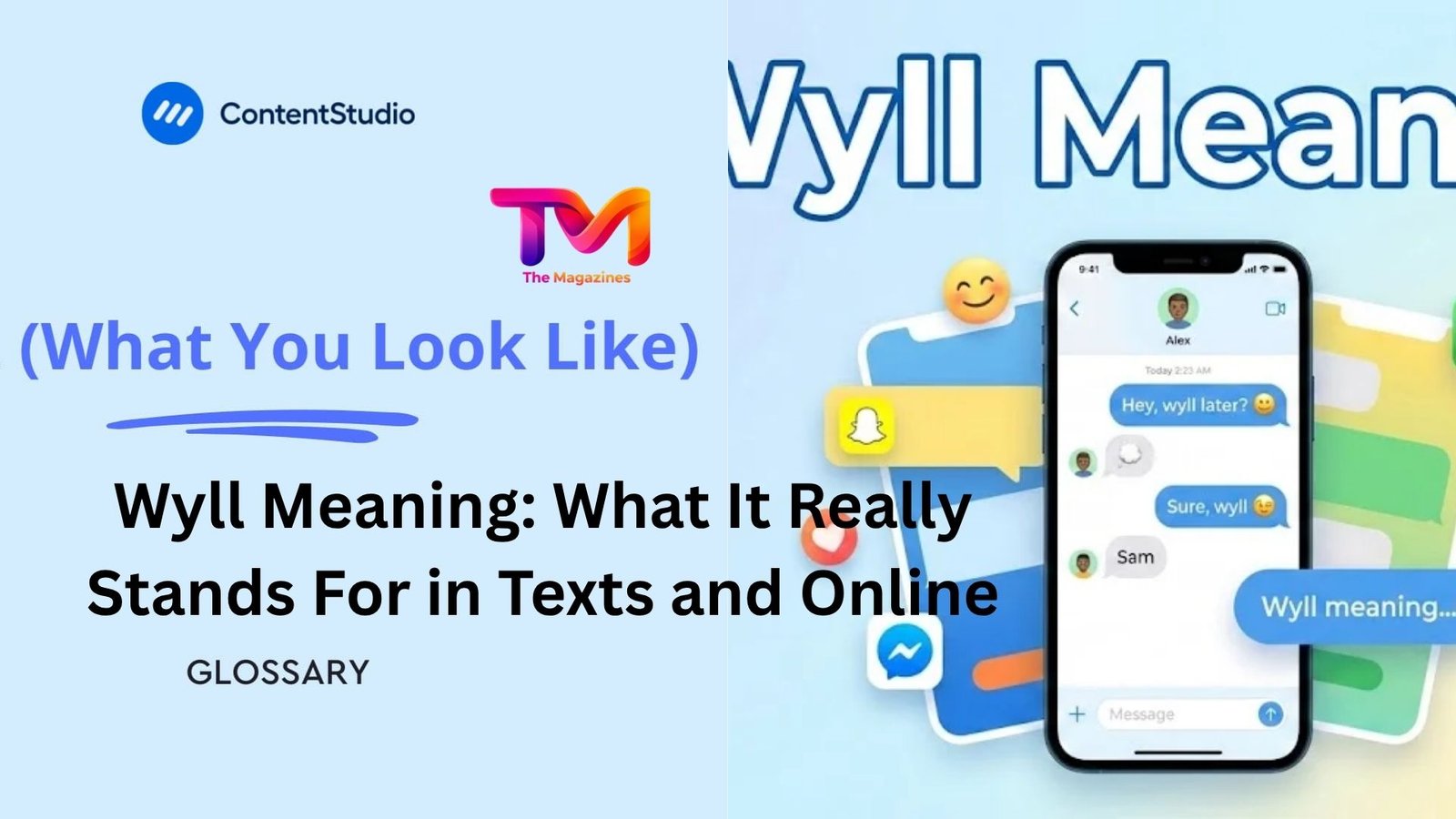
If you’ve spent any time on Snapchat, TikTok, or late-night group chats, you’ve probably seen “wyll” pop up and wondered what it means. It looks like a typo at first. Or maybe some random slang that slipped past you.
It’s neither.
“Wyll” is short for “what you look like.” That’s it. Simple. But like most internet slang, the meaning isn’t just about the words. It’s about when, how, and why people use it.
And that’s where things get interesting.
Why “wyll” Even Exists
Let’s be honest, people online like things fast. Faster than typing full sentences. Faster than proper grammar. Faster than thinking too hard.
“Wyll” fits that perfectly.
Instead of typing “what do you look like?” someone just drops “wyll?” and moves on. It’s quick, casual, and a little less formal. Almost like it lowers the pressure of the question.
There’s also something subtle about it. Writing out the full sentence can feel direct, even a bit intense. But “wyll” softens it. It feels more like a passing curiosity than a demand.
That matters more than you’d think.
Where You’ll Actually See It
You won’t find “wyll” in emails or professional messages. It lives in casual spaces. Think:
- Snapchat conversations
- Instagram DMs
- TikTok comments
- Gaming chats
- Dating apps
Picture this. You’ve been talking to someone for a couple of days. You’ve exchanged jokes, maybe a few voice notes. Then suddenly:
“wyll?”
It’s usually that moment when curiosity shifts from personality to appearance.
Not always in a serious way. Sometimes it’s just part of the flow.
The Real Meaning Depends on Context
Here’s the thing. Even though “wyll” literally means “what you look like,” the intention behind it can vary a lot.
Sometimes it’s innocent. Someone just wants to put a face to the name.
Other times, it’s more loaded.
In dating scenarios, it can feel like a turning point. A quiet checkpoint. Like, okay, we’ve talked enough… now let’s see who you are.
And occasionally, it can come off a bit shallow. Especially if it shows up too early in a conversation.
Timing changes everything.
How People Usually Respond
There’s no single “correct” response to “wyll.” It depends on your mood, your comfort level, and how the conversation feels.
Some people respond directly. They send a selfie. No big deal.
Others take a slower route. Maybe they reply with something like, “lol why?” just to feel things out.
And then there are people who dodge it completely. Especially if they’re not comfortable sharing pictures yet.
All of these responses are normal.
It’s your call. Always.
When It Feels Fine… and When It Doesn’t
Let’s be real for a second.
Sometimes “wyll” feels harmless. You’ve been talking, vibing, laughing. It feels natural to ask.
Other times, it lands wrong.
Imagine getting “wyll” two messages into a conversation. No real interaction. No effort. Just straight to appearance.
That can feel off. A bit transactional.
It’s like skipping the story and jumping straight to the cover.
People pick up on that quickly.
Why It’s So Common in Online Culture
Part of this comes down to how people connect now.
Online interactions often start without visuals. Unlike real life, where you see someone first and talk second, digital spaces flip that order.
So at some point, curiosity kicks in.
“What does this person actually look like?”
“Wyll” is just the shortcut version of that thought.
It also ties into how visual social media has become. Profiles, stories, selfies. Appearance is always part of the equation, even when we pretend it isn’t.
The Tone Behind the Word
Tone is everything here.
“Wyll?” can feel playful, awkward, curious, or even blunt depending on how it’s used.
Add a “lol” and it softens.
“wyll lol” feels casual, almost joking.
Drop it alone with no context, and it can feel a bit cold. Like a checkpoint rather than a conversation.
Even punctuation matters. A simple question mark changes the vibe.
Small details. Big difference.
Mini Scenario: Same Word, Different Feel
Two conversations. Same word. Completely different impact.
First one:
You’ve been chatting for a while. Sharing music. Talking about random things. Then they say:
“hey, wyll? just curious”
That feels natural. It flows.
Now the second:
You match. Say hi. They reply:
“wyll”
That feels abrupt. Like the conversation skipped a step.
Same word. Different energy.
That’s how subtle this stuff is.
Is “Wyll” Rude?
Not automatically.
It depends on delivery and timing.
Used thoughtfully, it’s just another casual question.
Used too early or too bluntly, it can feel dismissive. Like someone is only interested in looks and nothing else.
Most people won’t say it outright, but they’ll feel it.
So if you’re using it, context matters more than the word itself.
Should You Use It?
You can. But it helps to be aware of how it lands.
If the conversation has some depth already, it’s usually fine.
If you barely know the person, it might be worth holding off or phrasing it differently.
Something like “what do you look like?” or even sharing your own photo first can feel more balanced.
It shows effort. And that goes a long way.
Why People Sometimes Avoid Answering
Not everyone is comfortable sharing their appearance right away.
There are a few reasons for that:
Some people value privacy.
Some want to build a connection first.
Some just don’t feel like sending a picture at that moment.
And sometimes, they’ve had bad experiences before. Being judged quickly. Being ignored after sharing.
So if someone dodges the question, it’s not always a rejection. It’s often just a boundary.
Respecting that matters.
The Bigger Picture Behind a Small Word
“Wyll” might look like a tiny piece of slang, but it says a lot about how communication works now.
We shorten words, speed things up, and keep things light on the surface. But underneath, there’s still the same human curiosity.
Who are you?
What do you look like?
Do I connect with you?
The tools change. The questions don’t.
Final Thoughts
“Wyll” is simple on paper. It means “what you look like.” Nothing complicated.
But in real conversations, it carries tone, timing, and intention.
Used casually, it’s just part of modern slang. No big deal.
Used carelessly, it can shift the entire vibe of a conversation.
Here’s the takeaway. Pay attention to context. Read the room. And remember that behind every message is a real person deciding how much of themselves they want to share.
That matters more than any shortcut ever will.








Leave a Reply