
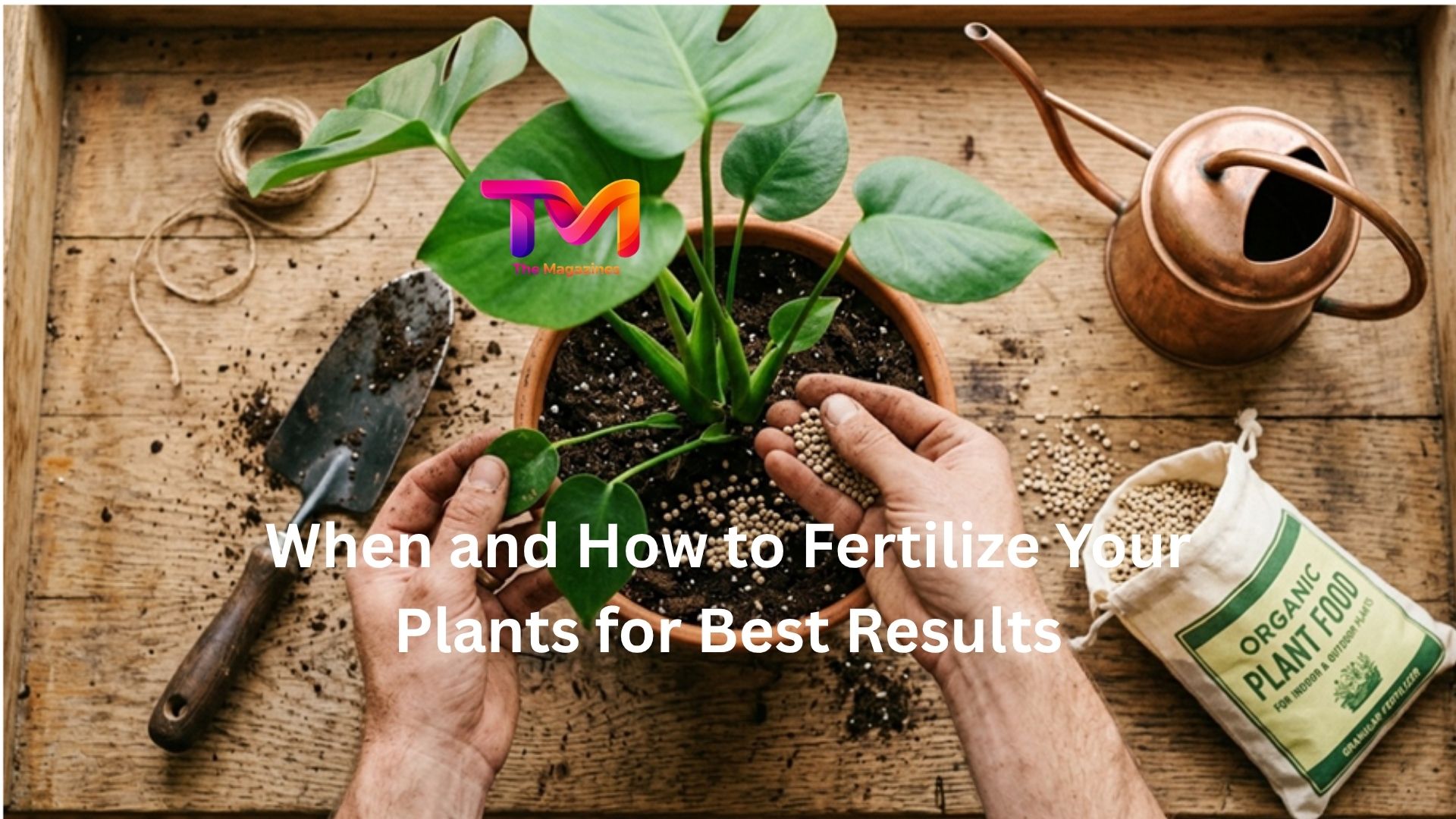
Most people kill their plants with kindness, not neglect. They reach for the fertilizer bottle the moment a leaf looks a little pale, and within weeks, the plant looks worse, not better.
Fertilizer isn’t plant food in the way we think of food. It’s more like a vitamin supplement — useful at the right dose, harmful in excess. Get the timing and method right, and you’ll see fuller foliage, stronger roots, and better blooms. Get it wrong, and you risk scorched leaves or a plant that never quite recovers.
This guide breaks down exactly when to fertilize, how to do it without guesswork, and what the numbers on that bag actually mean.
Why Timing Matters More Than the Fertilizer Itself
Plants don’t absorb nutrients at a constant rate all year. As a rule of thumb, plants should only be fertilized when they’re actively growing, because they only use added nutrients when producing new leaves, roots, and other tissue. Feed a dormant plant, and that fertilizer just sits in the soil — or worse, builds up to harmful levels.
This is why the same bag of fertilizer can help your tomatoes thrive in June and damage a houseplant in January.
The General Rule
The best time to fertilize is when plants come out of dormancy in spring — this is when deciduous plants leaf out, flower buds begin to burst, and new roots form. Fertilizer is most effective when applied during a plant’s peak growing cycle, whether that’s leafing out, flowering, or pushing new growth after winter dormancy.
When to Fertilize Different Types of Plants
Not every plant follows the same calendar. Here’s a quick breakdown by category.
| Plant Type | Best Time to Fertilize | Notes |
| Houseplants | Spring through summer | Fertilize only when actively growing; most rest during short winter days and need none then |
| Garden beds & flowers | Early spring, then mid-summer | Feed new growth in early spring, then give a second boost in mid-summer, especially to annuals and containers |
| Container plants | 2–6 weeks after planting | Start regular feeding two to six weeks after planting, depending on potting mix, watering schedule, and growth rate |
| Fruit & nut trees | Late winter | Late winter is considered the best time to fertilize fruit or nut trees |
| New transplants | Wait until established | Avoid fertilizing new plants until they’re established, since it can trigger weak, leggy growth |
Houseplants Specifically
March is generally a good time to start fertilizing indoor plants, with most houseplants benefiting from feeding once every one to three months depending on the formulation used. Once October arrives, it’s smart to put the fertilizer away again until spring, since most houseplants slow down considerably over winter.
How to Tell If Conditions Are Right (Not Just the Calendar)
Season is only half the equation. Weather and soil moisture matter just as much.
- Skip dry days. Wait until you’ve thoroughly watered, then apply fertilizer about a day later to prevent leaf burn.
- Avoid extreme heat. Avoid fertilizing on very hot days, when plants are already working hard just to stay hydrated.
- Hold off before frost. Avoid fertilizing during drought, extreme heat, or right before a hard frost.
- After rain is ideal. Moist soil helps nutrients soak in evenly instead of sitting on the surface or burning roots.
Understanding NPK: What the Numbers on the Bag Mean
Every fertilizer bag carries three numbers, like 10-10-10 or 5-10-5. These numbers represent the percentage by weight of nitrogen, phosphorus, and potassium in the product — the three nutrients plants need most.
Here’s what each one actually does:
- Nitrogen (N) — drives leaf growth and keeps foliage green; plants that are mostly leaves need a fertilizer with a higher first number.
- Phosphorus (P) — promotes root development and increases bloom and fruit production.
- Potassium (K) — helps plants resist disease and tolerate extreme temperatures and drought.
So a tomato plant pushing out fruit benefits from a different ratio than a lawn that just needs to look green. Matching the NPK ratio to your plant’s actual job — leaves, roots, or blooms — makes a noticeable difference.
How to Fertilize: Method Matters
How you apply fertilizer is just as important as when. Granular, powder, or pelleted fertilizers should be scattered around the base of the plant and lightly worked into the soil, while water-soluble products should be mixed in a watering can and applied directly to the plant.
A few practical pointers:
- For liquid sprays, apply on dry days during early morning or early evening, giving leaves time to absorb the material and avoiding extremely hot days when foliage can burn.
- Most granular fertilizers should be watered in afterward to help nutrients reach the root zone.
- For houseplants, general all-purpose fertilizers should be mixed at half or quarter strength, since indoor plants grow more slowly than the outdoor plants the label instructions are written for.
Signs You’re Overdoing It
More fertilizer is not better. Excessive fertilizer typically causes browning of leaf edges or leaf scorch, as soluble salts pull moisture out of root tissue, leading to wilting, marginal yellowing, and stunted growth. In containers, watch for a white or yellowish crust forming on the soil surface, yellowing of lower leaves, browning leaf tips, and very slow or no new growth.
If you spot these signs, stop fertilizing immediately and flush the soil with plain water to wash out excess salts.
Expert Tips for Better Results
- Test before you guess. A soil test tells you exactly what’s missing instead of leaving you to fertilize blindly.
- Less is often more. Especially indoors, under-fertilizing is far easier to fix than over-fertilizing.
- Match the fertilizer to the goal. Leafy growth needs nitrogen; blooms and fruit need more phosphorus and potassium.
- Keep a simple log. Jot down when and what you fed each plant — it makes troubleshooting much easier later.
Pros and Cons of Regular Fertilizing
| Pros | Cons |
| Stronger root systems and fuller foliage | Risk of fertilizer burn if overapplied |
| More flowers and better fruit yield | Can encourage weak, leggy growth if used on unestablished plants |
| Helps plants resist stress and disease | Requires attention to timing and weather |
FAQs
1. How often should I fertilize my houseplants? Most houseplants benefit from fertilizing once every one to three months during active growth, depending on the formulation, with little to none needed in winter.
2. Can I fertilize a plant right after I water it? It’s better to fertilize about a day after thoroughly watering, rather than immediately, to help prevent leaf burn.
3. What does a balanced fertilizer like 10-10-10 mean? It means the product contains equal percentages of nitrogen, phosphorus, and potassium — a general-purpose option suited to most plants without a specific deficiency.
4. Should I fertilize a newly planted seedling right away? No. It’s best to avoid fertilizing new plants until they’re established, since early feeding can cause weak, leggy growth.
5. What should I do if I think I’ve over-fertilized? Stop feeding immediately and water deeply to flush excess salts from the soil. Trim away severely burned leaves once new, healthy growth appears.
Final Thoughts
Fertilizing well isn’t about doing more — it’s about doing it at the right moment, in the right amount, for the right reason. Pay attention to your plant’s growth cycle, choose a fertilizer that matches its needs, and resist the urge to feed “just in case.”
Start with one plant this season, track how it responds, and build your feeding routine from there. Your plants will tell you the rest













Leave a Reply